• Skip to primary navigation
  • Skip to main content
  • Skip to primary sidebar
SimplifyEm Property Management Software Logo

510-790-9066
510-790-9066
》Sign In
  • Features
    • Accounting Software
    • Reconciliation
    • Tenant Screening
    • 1099 E-filing
    • Reports
    • Communication Center
    • Integrated Rental Application
    • Rental Listing
    • Online Rent Payments
    • Tenant Portal
    • AI in Property Management
  • Property Management
    • Online Rent Payments
    • Tenant Screening
    • Rental Listings
    • SimplifyEm CRM
    • FAQ
  • Rental Forms
    • Lease Agreement
    • Rental Application
    • Notice to Vacate
    • Notice to Quit
    • Lease Termination
    • Notice to Pay Rent
    • Rental Inspection
    • Eviction Notice
  • Pricing
  • Reviews
  • Schedule Demo
  • FREE TRIAL!
  • 》​Sign​ In

SimplifyEm

How to Prevent Mice in Your Rental Property

Filed Under: Business Management, Property Management, Property Management Software

One of the most unpleasant calls you can get from your tenant as a property manager is that there are mice in the property. To get rid of mice and prevent them from appearing again, it requires teamwork from both of you.

It’s also a very common problem, according to the US Census Bureau, 14.8 million homes have reported seeing a roach infestation over a 12 month period.

Here is some data on likelihood of Rodent Infestation versus No infestation based on these signs in the home.
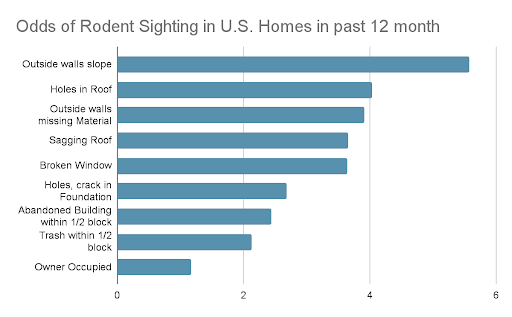
Rodent Sightings U.S Homes

It requires preventive measures, such as a mouse repellent strategy that makes the rental property less inviting. If there are mice already in the property, there is a solution to get rid of the mice already there.

What Causes Mice in the Property?

Especially during cooler months, mice look for warmth. So the risk is higher during the autumn and winter time. If you have cracks and openings in your house through the wall, window, basement, foundation or attic, you are more likely to invite mice.

Also, if you have good nesting material such as insulation, cotton, or feather in a pillow that is also attractive.

Finally, food is the other reason for mice to enter your house. Things such as unsealed pet food, open garbage cans, or just open food containers are very attractive to mice.

What Are Natural Repellents for Mice?

First, do all the obvious things. Seal entries into your. Inspect your house for cracks and openings to seal.

Get rid of food sources, by putting all food away in metal or heavy plastic containers. If it’s a paper container or light plastic, mice will be able to get in and get the food supply.

There are smells mice hate, such as peppermint oil, cayenne pepper, and cloves. Try to infuse those fragrances throughout the house.

Other smells that mice hate are smells of cat urine and urine of other predators. You can mimic this with ammonia, if you want a stronger smelling solution.

Other ways to get rid of mice? What is the best mouse bait?

Simple traps like a ‘snap trap’ with the best mouse bait peanut butter work, but obviously they are messy. Typically, it involves a quicker demise for the mice without longer suffering.

There are also electric traps that kill mice with electric shocks. They are effective but can be expensive.

There are also sticky glue mouse traps, but mice can learn to avoid them over time.

You can also use store bought chemical solutions and take precaution when using them around children and pets.

Finally, you can always use a professional pest control service, according to Angie’s list, that can cost from $180 to $600 but can be effective. But it can vary based on the size of your house.
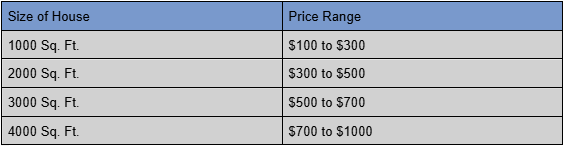
Cost of Mouse Prevention

Conclusion

Mice once they infiltrate are hard to get rid of. The best strategy is to seal your house so it’s hard for them to enter. Also, don’t provide any food or shelter source for them.

Frequently Asked Questions on Mice Prevention

  • What smells do mice hate?

    Mice are known to hate smells like peppermint, clover, and Cayenne pepper. They also hate the smell of Ammonia, since it smells similar to cat urine.

  • How long can mice live without food?

    Mice can survive 2 to 4 days without food. So if you eliminate their food sources, it’s a very effective mouse repellant strategy.

  • Do mice learn to avoid mouse traps?

    Mice will learn over time to avoid traps. At first, it’ll be new for them, but over time they learn.

Sources:

https://www.orkin.com/pests/rodents/mouse-control/mouse-deterrents

https://www.fixr.com/costs/mouse-exterminator

https://www.census.gov/library/stories/2021/04/how-many-american-homes-have-pests.html
The Ultimate Guide to Running a Property Management Company

Filed Under: Business Management, Property Management

Once you start a property management company, the day-to-day running of the business can overwhelm you. If you are not organized and process-oriented you’ll spend all day fighting emergencies and not be able to grow your business.

Understanding the Basics of Property Management

It’s important to know what property management companies do and how to make it an efficient process. There is typically a monthly rhythm to the business with specific activities at different times of the month:

  • Rent Collection
  • Dealing with late tenant payments
  • Sending out owner payments and reports
  • While maintenance and repairs can happen throughout the month, you can deal with vendor payment at a specific time of the month.

Finding new tenants for vacant units and gaining new owner clients are important revenue-generating activities that happen throughout the month and have to be prioritized.

By thinking about your business in this manner, you can potentially create an organization with specialized roles to scale your business.

It’s important to master key business processes to run and grow your property management company:

  • Monthly tenant rent collection and communication process
  • Monthly owner communication and payment process
  • Property maintenance tasks to minimize repair
  • Monthly financial accounting
  • Filling vacant units with great tenants in minimal time
  • Finding property management owner clients to grow your business
  • Build a variety of revenue streams beyond property management fees.

Running your property management company efficiently:

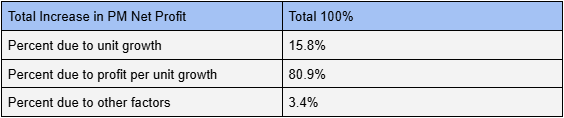
According to NARPM survey data (National Association of Residential Property Managers), the most successful property managers (those in the top quadrant of profit margin), have most of their growth come from more profit per unit versus growing the number of units (doors) under management.

Property Management Net Profit from Unit Growth vs Profit per Unit

Two Key Measurements to Ensure maximum profit margins

So how do you get into the top quadrant of profit margin? Well, two key indicators are your efficiency in labor and your efficiency in leasing:

  1. How much staff (labor cost) do you need to manage doors under management?
  2. What is your leasing cost to fill a vacant unit?

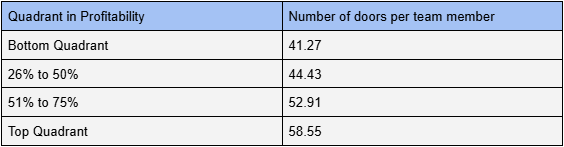
The top quadrant of property managers has a labor cost of 30.2% compared to the industry average where labor cost 43.7%. This also translates into more doors under management with smaller teams. You can see the difference with top-performing firms.

Door per Team Member Property Management

Another key metric to consider is how much it costs the property manager in terms of leasing wages and leasing commission compared to leasing fee earned. You can see from the table below there is a huge performance difference of a top performing company.

Leasing Profit for Property Management


In order to become a top quadrant property manager in terms of profitability, it’s important to keep your tenant happy so they stay for a long time. You should also make sure your owners are happy with your service so you can charge a premium property management fee and they see the value.

Running a Property Management Company – Key Processes

You have to pay attention to and optimize the following key processes:

  • Monthly tenant rent collection and communication process
  • Monthly owner communication and payment process
  • Property maintenance tasks to minimize repair costs
  • Monthly financial accounting
  • Filling vacant units with great tenants quickly

Monthly Rent Collection Best Practices

Monthly rent collection is one of the most important regular activities for your business. It should run a regular process with key steps:

  1. One of the most important regular activities is collecting rent from your tenants. It’s important to make it convenient for your tenant to pay rent in a variety of ways. Giving your tenants the ability to pay rent online via ACH or credit card is important.
  2. Automate Rent Payments: Provide tenants the option to set up automatic payments to avoid missed deadlines.
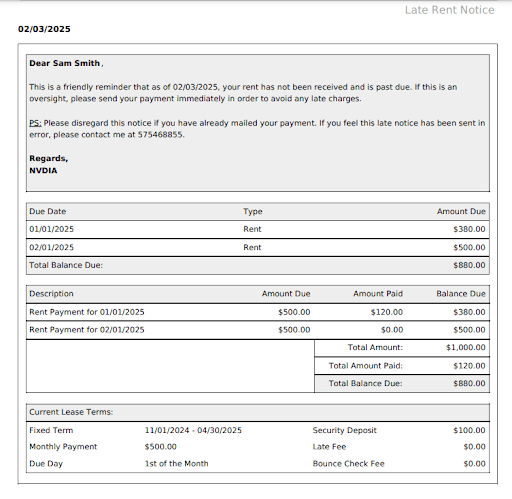
  3. Communicate status of payment to tenant: Use Late Rent Notices and Rent Receipts.Beyond making it easy, it’s important that your tenant realizes you will enforce the lease and timely payments are expected. If they’ve paid, sent them a rent receipt to give them positive feedback. If they haven’t paid on time then having an attorney-approved and a Late Rent Notice that is automatically sent out via Email and SMS is also critical.
  4. Track payments accurately: Maintain detailed records to identify late payments and follow up appropriately.

Typically the majority of your rent collection should happen in the first few days of the month based on lease terms you’ve signed with your tenants. It’s important you have good record keeping so you know which tenants are late and communicate to them appropriately, including potentially a late rent notice, followed by more stringent communication if needed by a certain day of the month (typically the 5th to 10th of the month). If you have not received rent.

SimplifyEm Late Rent Notice

Owner Communication and Payment Process

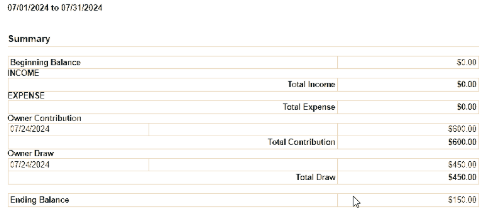
As a property manager, you are responsible for managing their properties. You should communicate how their properties are doing on a monthly basis and pay them their balance after all expenses (including your property management fees) have been deducted on a regular basis monthly. You should have a systematic monthly approach to this:

  1. Communicate to your owners with a professionally company-branded owner report that details how their property performed financially.
  2. Promptly disburse their funds. Transfer owner payments after rent clears in your bank to ensure accuracy.
  3. If there is or will be a vacant unit, give them a prompt action plan. This will help strengthen their trust in you.
  4. Set expectations with agreements on fees and payment schedule. Typically you want to send the owner report and owner payment after the rent has been collected and cleared in the bank (meaning the rent check didn’t bounce). Most property managers schedule this process between the 7th to 20th of the month. Set the expectation with your owners on the schedule.

SimplifyEm Owner Balance

Another key document to manage expectations is the property management agreement you sign initially with new owner clients. It sets expectations on fees you’ll be charging, when they should expect monthly owner payments, as well as your and their responsibilities.

Property Maintenance Tasks to Minimize Repair Costs

It’s important to have regular maintenance activities for your property so small maintenance issues don’t become major repairs.

  1. It’s good to have a regular schedule for different types of maintenance. For example:
    1. Monthly Maintenance Tasks – Inspect HVAC filters, test smoke alarms, check for leaks.
    2. Quarterly Maintenance Tasks – Inspect roofing, clean gutters, service heating systems.
    3. Annual Maintenance Tasks – Full property inspections, pest control treatments, review safety compliance.
  2. If you have a trusted vendor you work with for this such as gardeners, plumbers, or handymen it’s great to have them set up as vendors in your property management software.
  3. It’s important to have the ability to have a communication center so that you can reach your vendors for emergency repairs as needed via phone, email, SMS and directly
  4. Issue work orders through your software to your vendors Email and SMS, to streamline the process.

Monthly Financial Accounting Making Sure You’re Audit-Proof

Beyond taking care of recording activities with tenants, owners, and vendors, you need to make sure your bookkeeping is audit-proof. The best way to do that is to consistently do a 3-way reconciliation. It should be done at least monthly, although you can decide to do it daily or weekly. 

This process ensures that your financial transactions are complete and up-to-date. It involves making sure your bank statement balance matches your financial book balance and also matches your client (owner) balance. 

Having property management software that automates this reconciliation process is critical. This is one of the key elements your state’s auditor will ask of you if you’re ever selected for a financial audit.

Filling Your Vacant Units Fast with the Right Tenants Quickly

It’s critical that you know when a unit is going to be vacant. So that you can advertise the vacancy and get the unit ready for occupancy. You can get the right applicants for the vacancy and learn about their background. The faster you can fill the vacancy, the lower your leasing cost, and the more profitable your leasing fee income will be. You can learn more about this in our ultimate guide to finding the right tenant.

Strategies to Grow Your Property Management Company

Keeping your current owner clients happy is the key to having a profitable property management company. If you want to turbocharge growth, it’s important to focus on two additional key business processes:

  • Finding property management owner clients to grow your business
  • Build a variety of revenue streams beyond property management fees.

Acquiring New Property Owner Clients

Requires a variety of marketing and sale activities:

  • Advertising campaign for new owner clients
  • Call campaigns for new owner clients
  • Advertising campaign for existing owner clients (for additional units or referrals)
  • Call campaign for existing owner clients (for additional units or referrals)

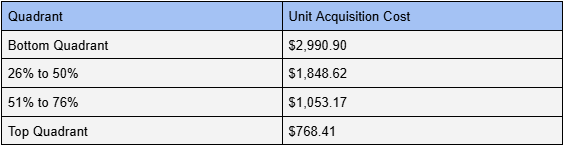
It’s best to experiment with all and see what’s most effective. Here are costs to acquire additional units to manage. You want to try to get to the top quadrant:

Unit Acquisition Cost Property management

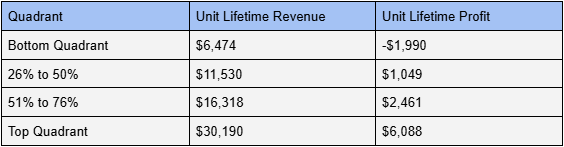
What is critical is to know how much it costs you to acquire a unit and compare that to the lifetime value of that unit (how much revenue you will typically earn from a unit). The lifetime value of the unit is made up of your earnings from the unit, and typically, how long you manage a unit.

If your lifetime value of a unit is $10,000, you can afford to spend enough to get a new owner client so that it’s still profitable for you over the lifetime.

You can see the Unit Lifetime value for property management companies and assess where you fit:

Lifetime Profit Property Management

Finally beyond the CAC and LTV for acquiring an Owner client, you have to understand why they choose to use a property manager and why they choose not to use a property management service and do it themselves.

According to Peter Lohman here are some factors:
Why owner clients choose to use a property manager:

  • Making property management easier
  • Boosting profitability
  • Reducing legal risks

Reasons owner choose not to use or stop using a property manager:

  • Decline in service quality
  • Fee Increases
  • Tenant placement delay

Building Multiple Revenue Streams Beyond Management Fees

This is the secret sauce to turbocharge your property management company’s revenue growth.

Property management companies charge PM fees; however the most successful companies provide many other services and provide additional value to their owner and tenant clients.

Notice the difference in where revenue comes from for the most profitable property management companies versus the least profitable:

Ancillary Fee - Property Management

Some of the ancillary fees to consider according to NARPM:

  • Application Fee
  • Leasing Fee
  • Renewal Fee
  • Other Owner Paid Fee
  • Other Tenant Paid Fee
  • Owner Maintenance Coordination Fee
  • Vendor Maintenance Referral Income
  • Other Fees

Leveraging Technology to Streamline Your Property Management Business

SimplifyEm property management software can help you easily manage your key business processes and handle them at scale. So when it comes to managing your vacant units, tenants, owners, vendors, banking and accounting. You can handle them seamlessly with easy to use software like SimplifyEm whether you’re managing 8 units or 8,000 units. So it allows you to grow your business without growing your labor cost as much.

Mastering Property Management for Long Term Growth

In conclusion, running a property management company can be very profitable, but it requires you to be great at operations, marketing, sales, and accounting. If you pay attention to each key monthly process and make sure it’s efficient and scalable and are learning from best practices in the industry, you could have great long-term success.

Frequently Asked Question (FAQs) on Growing a Property Management Company

  • What is a property management company?

    A property management company oversees the daily operations of rental properties on behalf of property owners. Responsibilities include tenant management, rent collection, property maintenance, and financial reporting.

  • What are the key responsibilities of a property manager?

    Property managers handle marketing, tenant screening, lease agreements, rent collection, maintenance coordination, financial reporting, and legal compliance.

  • How do I start a property management company?

    Starting a property management business involves:

    1. Obtaining the necessary licenses and certifications
    2. Setting up a legal business structure
    3. Building a network of property owners and tenants
    4. Implementing property management software
    5. Developing streamlined processes for efficiency
  • What challenges do property management companies face?

    Common challenges include tenant disputes, late rent payments, property maintenance issues, legal compliance, and managing multiple properties efficiently.

  • How can I make my property management business more efficient?
    1. Use property management software for automation
    2. Establish clear policies and procedures
    3. Develop strong tenant screening processes
    4. Create a network of reliable maintenance professionals
    5. Stay updated on local real estate laws and regulations
  • What software can help with property management?

    Software like SimplifyEm helps with tenant tracking, rent collection, maintenance scheduling, financial reporting, and more.

  • How do I attract property owners to my business?
    1. Build a strong online presence
    2. Offer competitive and transparent pricing
    3. Provide excellent customer service
    4. Use referrals and networking to gain trust
  • What legal requirements must I meet?

    Depending on your location, you may need a real estate broker’s license, business registration, insurance coverage, and compliance with landlord-tenant laws.

  • How do I handle difficult tenants?

    Have clear lease agreements, document all interactions, follow legal eviction procedures if necessary, and use mediation when possible.

  • How can I scale my property management business?
    1. Automate tasks with software
    2. Hire a reliable team
    3. Expand marketing efforts
    4. Offer additional services like property maintenance or real estate consulting

For more details and tools to simplify property management, visit SimplifyEm.


Sources:

https://www.narpm.org/docs/NARPM_FinancialPerformanceGuideOverview.pdf

https://www.peterlohmann.com/blog/the-property-management-trends-report 

How to open a Trust bank account for a property management company – Step by Step Guide

Filed Under: Business Management, Property Management

Why do property managers need a trust account?

You are required to open a trust account as a property manager. This is critical to ensure your clients funds are handled properly and legally. In many states it’s a legal requirement, failure to do so can lead to fines and loss of license.

A trust account is essential for keeping client funds separate from property manager’s business finances. It ensures transparency, legal compliance, and property fund allocation. These accounts typically hold:
Security Deposits – Funds collected from tenants and help until the lease ends.
Rent Payments – Monthly rent received from tenants and distributed to property owners.
Maintenance Reserves – Money set aside for property repairs, emergency fixes, or routine maintenance.

By maintaining a dedicated trust account, property managers can prevent commingling of funds, ensuring financial integrity and avoiding legal issues.

However it can be difficult to set up since a lot of bank employees don’t know about this type of bank account.

Step by Step process to open a property management trust account:

1) Choosing the right bank for a trust account – Typically a bank that provides trust account services and also FDIC insured. Ask to speak to a business banker to let them know you’re trying to set up a property management ‘Client Trust Account’. If they are not familiar with that sort of bank account, look for another banker.

2) Required Documents for a property management trust account – You’ll generally need the following documentation in order to open the account:

  • Business License – Ensures you are licensed for your state.
  • Trust Agreement – Typically this is the property management agreement you signed with the owners
  • Corporate Paperwork – If you are an LLC or corporation, you’ll need your articles of incorporation.

3) Naming the account correctly- The account name must depict that you are holding other people’s funds: “[Property Management Company Name] Client Trust Account”

You should ensure with the bank that its a business checking account, FDIC insured, beyond the account name it registered with the Broker as a trustee.

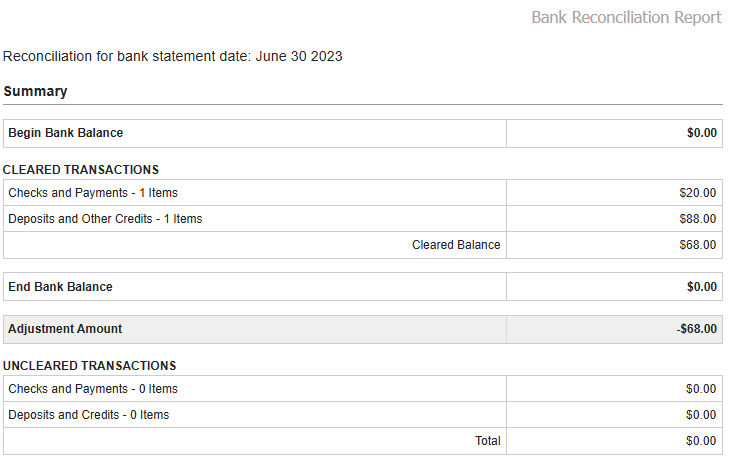
4) Using Property Management Software for compliance- that maintains accurate records of funds tied to each tenant, property, and owner. It should allow for bank reconciliation and 3-way reconciliation in an automated fashion.Bank Reconciliation - SimplifyEm

Opening a trust account is an essential part of starting a property management company. You are legally obligated to manage your clients funds in a legal, transparent manner, without commingled funds.

Frequently Asked Questions – FAQs on Trust Bank Accounts for Property Managers

  • What is a trust account for property management?

    A trust account is a separate bank account used by property managers to hold client funds, such as rent payments and security deposits, ensuring proper handling and compliance with legal requirements.

  • Why do property managers need a trust account?

    Many states require property managers to use trust accounts to prevent the commingling of client funds with business funds. Failure to comply can lead to fines, penalties, and even loss of license.

  • What are the steps to open a trust bank account?
    1. Choose a bank that offers trust accounts for property managers.
    2. Gather required documents (business license, EIN, property management agreements, etc.).
    3. Ensure compliance with state regulations regarding trust accounts.
    4. Open the account and designate it as a “Trust Account.”
    5. Set up proper bookkeeping and record-keeping systems.
  • What documents are needed to open a trust account?

    Typically, you will need your business license, Employer Identification Number (EIN), a property management agreement, and possibly a state-specific trust account certification.

  • Can a personal account be used instead of a trust account?

    No, using a personal account can result in legal consequences, as trust accounts are designed to keep client funds separate and ensure transparency.

  • Are trust accounts subject to audits?

    Yes, many states require regular audits to ensure compliance with regulations. Keeping accurate records is essential.

  • What happens if I don’t open a trust account?

    Failure to maintain a trust account can lead to penalties, legal action, and potential revocation of your property management license.

  • For more details, visit SimplifyEm.

Sources:

https://dre.ca.gov/files/pdf/OpeningTrustAccount.pdf

How to start a profitable property management company: A step-by-step guide

Filed Under: Business Management, Property Management

Starting a property management company could be lucrative if you have the right skill set to manage a business like that. The right skill set includes great marketing, sales, operations, and financial ability. It’s an area with growing market needs.Here are some things you should know about the market and unique aspects of this type of business:

  • Property Management Market Size
  • Property Management Company Financials
  • Things you need to get started

Property Management Market Trends and Size

There are 49.5 million residential rental units in the US, according to the Better Business Bureau. The overall revenue generated is $84.73 Billion. There are roughly 300,000 property management companies. It is a highly fragmented industry with the top 7 companies generating only 10% of overall revenue.

There is great opportunity in this type of market for innovation and growth.

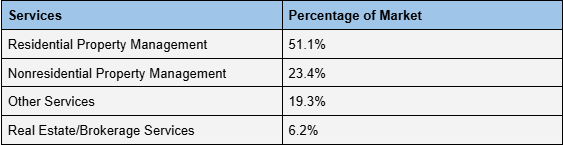
Property management firms tend to specialize in different types of properties and services, according to the Better Business Bureau:

Property Management Market Share of Services - SimplifyEm

Residential real estate is by far the biggest segment property management companies specialize in.

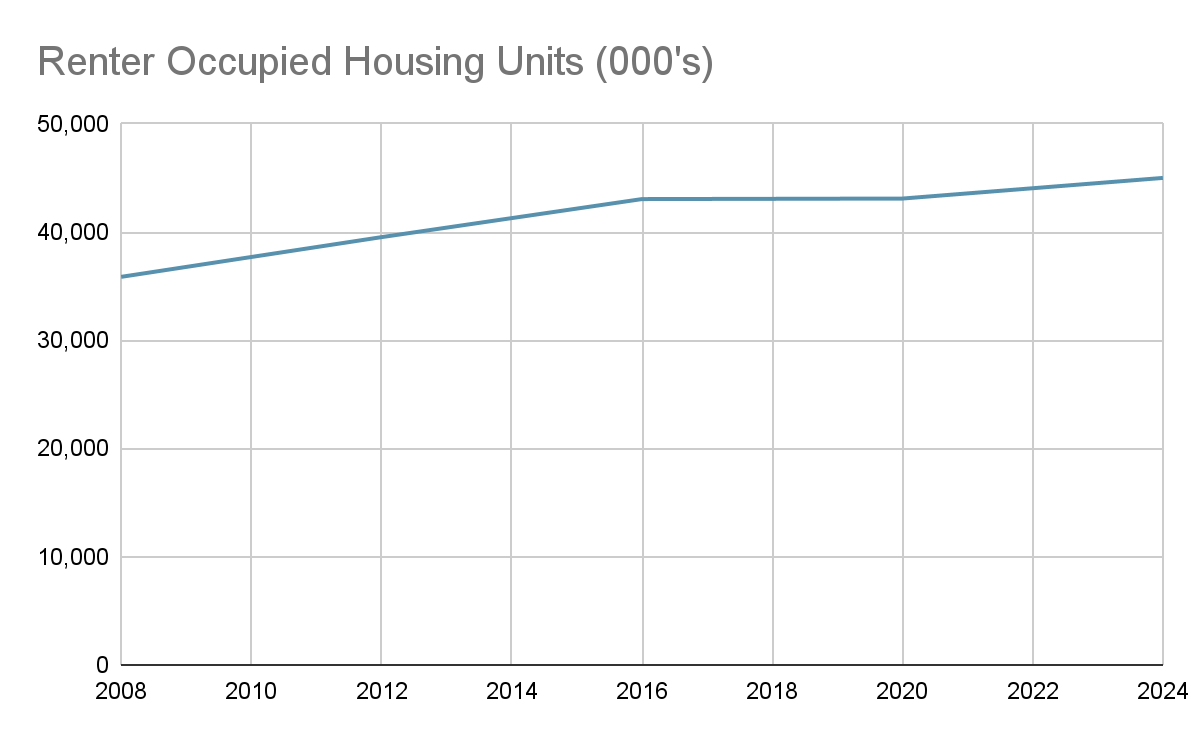
With the shortage in housing supply and the cost of housing increasing, there is a great number of renters, and rental housing supply is becoming a greater percentage of housing supply. These trends lead to good growth potential for property management companies.

The amount of renter-occupied housing continues to grow, according to the Federal Reserve Bank:Renter Occupied Housing Units - SimplifyEm

The property management industry is expected to experience 7.5% annual growth over the next five years, according to the Better Business Bureau.

How much do property management companies make?

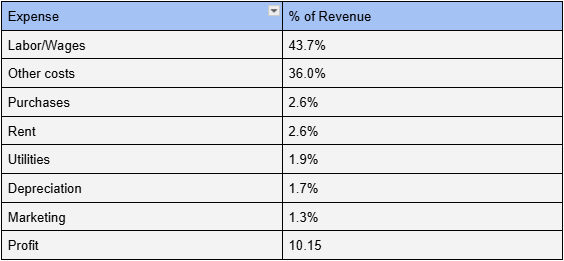
The typical profit for a firm is 10.1%, and the biggest expense is labor costs, which average 43.7%:

According to the Bureau of Labor Statistics, there are ~285,000 people employed in property management making wages from $37,000 to $136,000.
Property Management Industry Revenue Breakdown

Property Management Company Percentage Cost - SimplifyEm

Just like any other business, you should do your due diligence before starting a property management company. Really look at your local conditions and unique needs to see if it’s viable for you.

Essential Steps to Launch a Property Management Company

If you decide to embark on starting a property management company, here are some things you should research and have set up, before you get your first customer:

  1. Property Management Licensing and Certifications Requirements
  2. Setting up company structure (such as LLC)
  3. Setting Up Trust Bank Account
  4. Creating a business plan with some key areas researched and planned
  5. Getting appropriate insurance to protect yourself
  6. Appropriate legal contracts: rental agreement, lease, property management agreement
  7. Getting office space
  8. Getting the Right Property Management Software

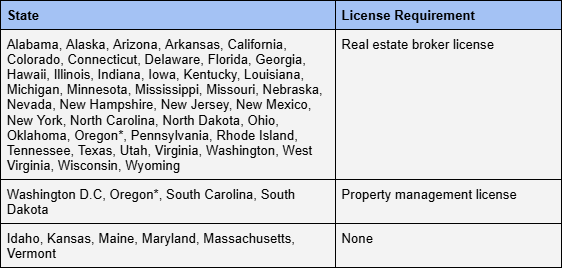
1) Property Management License – this can vary for each state. The majority of states require you to have a real estate broker license so that you are licensed to handle money in trust for other people. A few states require a specific property management license. Also, there are a few states that have no requirements.

Property Management License Requirements - SimplifyEm

* Oregon requires with real estate broker or property management license

2) Corporate Structure – An early decision you have to make is to determine what kind of structure for your business: LLC, S-Corp, C-corp? There are benefits and costs with each type of entity. It’s best to consult with your attorney and CPA prior to making this decision.

3) Business plan- this will serve as a plan for you to research and answer some key questions for your property management business. You can go to the Small Business Administration to see templates for a Business plan.

  • What sets your company apart from existing competitors.
  • How do you want to structure your organization – will you run it by yourself? Will you have an Office Manager? Leasing Manager? If not at the start how large does your business have to get before you start hiring?
  • What services do you offer – Collecting Rent? Maintenance? Filling vacant units?
  • What are your marketing channels to get clients?
  • What kind of money do you need to start your business? Detail out what startup will be used for.

4) Trust bank account – Since you’ll be handling other people’s money, you have to set up a trust bank account. A trust bank account is a deposit account that can be opened by a trustee (the property manager) for the benefit of someone else (beneficiary); in our case, property owners and tenants. These bank accounts are protected during and after Grantor’s life.

Your State’s department of real estate will require you to account for this bank account by doing monthly bank reconciliation and if they audit you they’ll typically require a 3-way reconciliation to show your book, bank, and owner balances all match.

5) Insurance – Whenever you start a business, you should look into appropriate insurance to protect yourself from liability. Property Management is no different.

You should absolutely look into general liability insurance which protects you against damage to another person’s property while engaging in work. It also protects you from someone getting hurt while visiting your business.

If you will be hiring employees, worker compensation insurance is a good idea and, in some states, is a requirement that you should look into.

6) Legal contracts – You absolutely should have an attorney-approved, state-specific contract that is comprehensive and gives you legal protection, and also clearly spells out requirements for yourself and other parties that you’ll be signing a contract with. There are three main groups of people you’ll have to deal with and sign a contract with:

  • Applicants for a vacant unit – Rental Application
  • Tenants – Lease Agreement
  • Owners – Property Management Agreement

7) Office Space – Even in this online enabled remote working environment, you may decide you need an office space for your office workers as well as tenants.

8) Property Management Software – It’s important to think about your business needs and evaluate property management software to make sure it meets your needs.

Here are some key things to consider:

  • Tenant functionality: Rental Advertising, Rental Application, Tenant Screening, Leasing, Online Rent collection, Tenant Portal, Move In/Out
  • Accounting functionality: that has NARPM approved Chart of Accounts, Bank Reconciliation, Transaction History and Audit Trail, CPA ready financial reports
  • Owner functionality: Professional Owner Reports, Online Payment to Owners, Owner portals, 1099 E-filing
  • Vendor functionality: Work Orders, Vendor Portal, Online Payments to Vendors, 1099 E-filing
  • Bank functionality: Bank Download Feed, Bank Reconciliation, Deposit Slips
  • Communication Capability – Ability to communicate to any individual (tenant, owner, vendor) or in bulk across all channels (email, SMS, phone) by web or mobile app.

These are some of the basic requirements, SimplifyEm provides these and many more features in an easy to use and cost effective manner.


Frequently Asked Questions – FAQs On Starting a Property Management Company

  • What is a property management company?
    A property management company oversees rental properties, handling tenant relations, maintenance, rent collection, and legal compliance on behalf of property owners.
  • Do I need a license to start a property management company?
    Licensing requirements vary by state or country. Some places require a real estate broker’s license, while others may have different regulations. Check local laws before starting.
  • How do I find my first clients?
    Start by networking with real estate investors, landlords, and homeowner associations. Utilize digital marketing, social media, and referrals to attract clients.
  • What are the startup costs for a property management company?
    Startup costs include business registration, licensing, insurance, marketing, software, and office setup. Initial costs can range from a few thousand to tens of thousands of dollars.
  • How much can I charge for property management services?
    Fees vary but typically range from 8% to 12% of monthly rent for residential properties. Additional fees may apply for leasing, maintenance coordination, and inspections.
  • What software is best for managing rental properties?
    Property management software like SimplifyEm or AppFolio can help streamline operations, tenant tracking, and financial management.
  • How do I handle difficult tenants?
    Have clear lease agreements, conduct thorough tenant screenings, and follow legal eviction procedures when necessary. Good communication helps resolve issues early.
  • Can I start a property management business from home?
    Yes, many property managers start from home. However, as your business grows, you may need office space for employees and client meetings.

Sources:

https://www.bbb.org/all/industry-hub/property-management

https://www.bls.gov/oes/2023/may/oes119141.htm

https://fred.stlouisfed.org/series/ERNTOCCUSQ176N

The Ultimate Guide to Finding the Right Tenant for Your Vacant Property

Filed Under: Property Management, Tenant Management

A critical period for a rental property is when it’s vacant. It’s not earning money, and finding the right tenant is critical to the profitability of your rental business.

There are three key steps in order to fill a vacant property:

  1. Advertise the vacant property so you attract the best rental applicants.
  2. Make sure the property is fully repaired and cleaned so you get the best potential tenants to fill out a rental application.
  3. Conduct a thorough tenant screening process to get the best tenant for the property and also to protect yourself from fraud.

Best Practice to Advertise Your Property

Your prospective tenants are comparing your rental listings with thousands of others. It’s important your rental ad is seen and eye-catching.

A sample list of websites to post your rental ad to get the most exposure:

  • Zillow.com
  • Apartments.com (and its family of listing sites)
  • Rentpath.com (and its family of listing sites)
  • Craigslist
  • Instagram
  • Facebook Marketplace

You should also create a rental ad that attracts prospective tenants, here are some things to focus on:

Headline: You should give all key information about the property in a way that grabs the attention. It should include the rent amount, number of bedrooms and bathrooms, address/location, and a feature that appeals to your target tenant. For example, if it’s a one-bedroom unit in a lively downtown area with lots of young people, bring up that it’s close to lots of restaurants and clubs within walking distance.

Pictures and Video: The next most important factor is the pictures and video. Take the time to take quality photos and consider investing in staging your rental property.

Consider a discount: If it’s a competitive market, you should consider offering a discount in the ad, such as a gift card or something else to make your ad stand out.

Highlight the key amenities: Whether it is great internet, security for the building, or parking for cars included. Emphasize the amenities that are most valuable and in high demand in your ad for the target market

Get your rental property ready to show to prospective tenants.

It’s always important to have a checklist as you’re preparing your vacant rental property for showing to potential tenants.

Have a robust move-in and move-out process that is executed with detailed forms that have pictures and comments on each aspect of your rental property, noting down repairs needed.

Have a thorough deep cleaning done to the property.

Consider staging the vacant unit with rented furniture to help prospective tenants picture living in the unit. It also helps you improve your rental ad photos.

Make sure you are giving a good first impression of yourself as a property manager as you’re showing the property. Not only is the tenant considering the property, but they are also evaluating you. Do you have a professional appearance? Are you punctual?  Are you thoroughly answering their questions? 

How to conduct a thorough background check?

A thorough background check – consisting of rental application, tenant screening, and checking on references- can save you lots of problems with tenants that cause problems later.

Did you know that the American Apartment Association Owner found that 23.8% of eviction filings were from tenants that had falsified their rental application information?

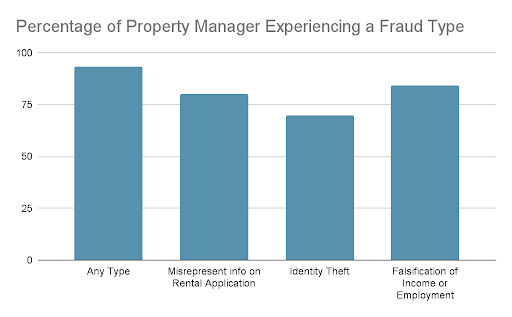
In fact, most property managers are seeing fraud of some type, according to the National Multifamily Housing Council:

If you pick the wrong tenant and have to evict them, the cost can be astronomical:

  • 2-4 months lost rent
  • Loss of leasing commission
  • Court filing fees ranging from ~$100 to ~$400
  • Sherriff’s notice fees ranging from ~$50 to ~ $400
  • Miscellaneous filing service fees can run up to ~$500
  • Cleaning fees ~$200
  • Marketing feed to relist unit  ~$100
  • Legal fees can run up to ~$1000

So what should you do? Run a thorough background check and check on references. Use the latest fraud detection technology as well.

  1. Make sure you have your applicants fill out a rental application.
  2. Check all supporting material (bank statements, paycheck stubs, identity information)
  3. Use fraud detection technology to detect potential fraudulent documents.
  4. Do thorough reference checks on employment and previous landlords.
  5. Do credit and criminal and eviction history checks (with approval from the applicant).

Get to know the potential tenants as you’re showing the property. As you’re showing the property its a great opportunity to get pertinent information about them:

  • Where do they live now?
  • Why are they moving?
  • What is their preferred move-in date?
  • Do they have pets?

Are they willing to fill in a rental application and go through a tenant screening?

How does SimplifyEm Property Management Software help with getting the right tenant?

SimplifyEm has all the features you need to get the right tenant into your vacant unit:

  1. Advertise your vacancy on all major listing sites to get your property maximum exposure to potential tenants.
  2. Use SimplifyEm’s State-Specific Attorney-Approved Rental Application or upload your own Rental Application. You can send it to any applicant online and have them sign via e-signature and collect the rental application fee online.
  3. Use our income verification tool to help as an extra check against paystub fraud.
  4. Run a tenant screen on any applicant and get their credit, criminal and eviction history.
  5. You can also use SimplifyEm’s State-Specific Attorney-Approved Lease or upload your own Lease. You can send it to any tenant online and have them sign via e-signature and collect their Security Deposit online.


Frequently Asked Questions – FAQs

  • Why is it important to find the right tenant for your property?
    Nearly a quarter of eviction filings were from tenants that had falsified information on their rental application. It’s important to have a thorough background check to make sure you have the right tenant for your property.
  • What steps should I take to advertise my vacant property?
    You should make sure you advertise on all major listing sites. Have a great title that gives key information and the most important amenity that target customers will care about. Finally, have great pictures for the property.
  • How do I verify a tenant’s income and employment?
    The best ways to verify income and employment are to ask for permission to run a credit report, use an income verification tool that analyzes a bank account to cross-check income, and finally call an employer to verify employment.
  • How can SimplifyEm help with tenant screening?
    SimplifyEm Property Management software provides all the tools and features to allow you to get all the information you need on a rental applicant: Credit Report, Criminal Report, Eviction History, Income Verification via bank account analysis.  You can also use SimplifyEm’s Rental Application and Attorney-Approved State specific lease.

Sources:

  1. https://www.american-apartment-owners-association.org/property-management/warning-application-fraud-is-on-the-rise/ 
  2. https://www.nmhc.org/research-insight/research-report/nmhc-pulse-survey-analyzing-the-operational-impact-of-rental-application-fraud-and-bad-debt/ 

Why is tenant management so important for the success of your rental property business?

Filed Under: Property Management, Property Management Software, Tenant Management

Did you know tenant management is one of the most critical factors that determine your rental property’s profitability? If you can find, attract, and manage great tenants that pay on time and stay for a long period of time. You’ll reduce vacancy rates, ensure timely payments, and improve your bottom line.

Optimizing Revenue

Having a satisfied tenant and a well-maintained property influences revenue generated by the property.

    • It minimizes vacancy by having a tenant satisfied with the property, the maintenance issues, and good and responsive communication with the property manager. Minimizing vacancy is critical to having a property earning maximum income.
    • By having a well-maintained property with a great reputation, you can attract premium tenants that are willing to pay market rates or above to get a residence they’re proud of.

Proven strategies for managing tenants effectively

  1. Efficient Rent Collection Process

    Make it easy for your tenants to pay rent and on time. According to Fox Business Reports, ~87% of tenants pay their rent on time, so it’s imperative to stay on top of rent collection. You can make it easier by:

    • Providing multiple easy and convenient ways to pay rent can help with collections. Online rent collection from the bank and via credit card versus mailing a check is much more convenient for your tenant.
    • It should be clear to the tenant when the rent is due. The more methods you can keep them informed, the better: online accounts, emails, and SMS. The more automated you can make the process for yourself via software, the better.
    • It should be clearly communicated how late fees on late rent will be calculated to the tenant. So they are incentivized to pay on time.
    • Timely and professional communication with your tenants about rent collection, such as timely rental invoice, rent receipt, late rent notices as appropriate.
  2. Maintaining property value

    Having a property occupied by quality tenants is critical in the upkeep of property. Making sure you’re on top of all maintenance and repair issues as required can prevent a major property repair by dealing with it when it’s minor. Staying on top of maintenance is a great way to ensure you keep quality tenants.

    • The condition and appearance of the property is the first impression and the best way to attract the attention of the best tenants.
    • Whether you’re using a property management company nearby or managing the property yourself, being proactive on maintenance and treating key repairs as a priority.
    • Having your property occupied with market or above rent is a key determinant in the value of your property since it increases the profit margin for the property. So have a proactive maintenance plan so that your tenants are satisfied and stay long-term.
  3. Sign a comprehensive Lease Agreement

    Signing a comprehensive lease is the best way to protect yourself from legal problems down the line. It also assures your tenant that you’re thorough and well organized. The lease should be clear on its terms for duration, rent payment, and responsibilities of each party (the property manager and tenants). It should also abide by all real estate rental laws of your state and city.

    • You should have an attorney-approved lease that is valid for your city/state. It should at a minimum define the:
        • Duration
        • Monthly rent payment amounts, due date, delivery of payment
        • Security deposit
        • Occupation Limits
        • Premise Address and Property Description
        • Pet Policy
        • Assignment and subletting rules
        • Tenant and landlord responsibilities
        • Rent increase clause if appropriate
        • Break and Lease Termination (how to get out of a lease)
        • Legal Costs
        • Insurance responsibilities (renters insurance, general liability insurance)
        • Other payment responsibilities (utilities, minor repairs)
        • Rental Agreement Disclosures
        • How does renewal of lease work?
        • other payment responsibilities, move-out terms, liability
    • Sign longer-term leases. Sometimes it’s better to sign a long-term lease to minimize tenant turnover over the long term. This minimizes the costs with finding new tenants. Here are some statistics on the lease duration in the United States, according to the US Bureau of Labor Statistics:
        • 59.6% of leases are 12 months in length.
        • 31.8% of leases are month to month.
        • 8.6% are other durations (with the leading duration of other being 24-month leases).
    • Having an online lease with an E-signature is very helpful in establishing the lease with thorough proof of agreement by both parties.
  4. Reduce Vacancies

    Besides how much rent you charge, the most important factor in the profitability of your property is minimizing vacancy time. According to the US Census Bureau, the vacancy rate in the US is ~6.9%, which can vary based on your region.

    • Make sure you have a thorough tenant screening process to get tenants that are responsible and pay their rent on time.
    • A key factor in a tenant staying is maintenance of the property and communication with the tenant. Keep the tenant informed about all key information related to the property and also their maintenance requests.

How to simplify tenant management with SimplifyEm Property Management Software?

Simplifyem can help you as a property manager with this key activity of managing your tenants. We provide all the tools and services you need to excel!

  1. Start advertising your Rental Listing through SimplifyEm to get the best rental applicants.
  2. Perform Tenant Screening and get credit, criminal, and eviction history on your potential tenants.
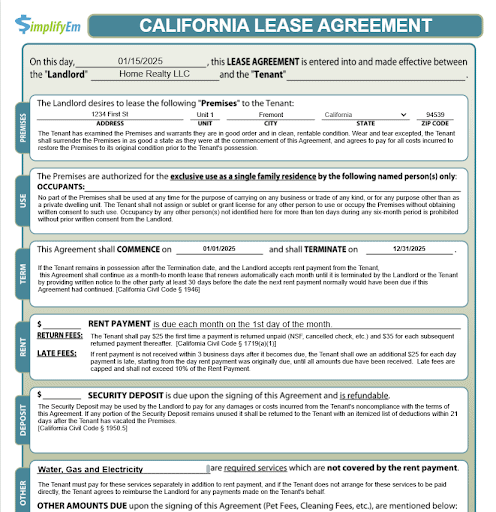
  3. E-sign an attorney-approved lease provided with SimplifyEm or Upload your own company lease. We’ll be able to email your tenants for review and E-signature and it’s legally enforceable. SimplifyEm Lease Form
  4. Set up online rent payments to make it easy for your tenant to pay rent directly from their bank account via the ACH network or through credit card Payments. The money gets deposited directly into your bank account, and the rent is recorded for you within SimplifyEm so your financial records are up to date.
  5. Require Renter Insurance for your tenants so you can be sure they are well insured to lower your risk and liability.
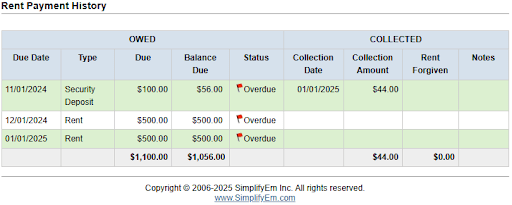
  6. Keep track of exactly what your tenants haven’t paid. So if you ever have to evict a tenant, you have bulletproof records. SimplifyEm Rent Payment History
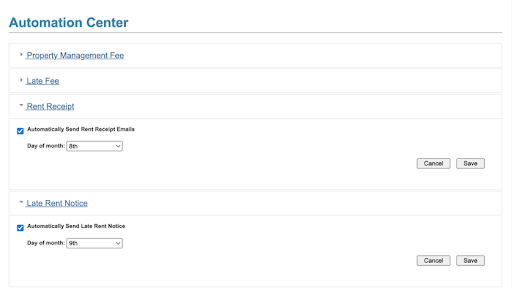
  7. Professional reports for your tenants with tenant invoices, rent receipts, and late rent notices that can be created and sent with the click of a button via email or SMS. Everything can be automated for you so you don’t have to do anything. SimplifyEm Automation Center
  8. A communication hub for you to see all email, SMS, and phone calls from/to tenants available on your computer and also on your phone via our mobile app.


Frequently Asked Questions – FAQs

  • What is tenant management, and why does it matter?

    Tenant management is the process of attracting and retaining tenants for your rental property. This involves thorough tenant screening, signing a comprehensive lease, collecting and tracking rents, communicating and handling maintenance issues for tenants, and a thorough move-out process.

  • How does tenant management impact property maintenance?

    Property maintenance is affected by great communication with tenants to understand property issues and having responsible tenants.

  • Can poor tenant management lead to financial losses?

    One of the biggest factors in rental property performance is non-payment of rent by a tenant and extended vacancy. Both are affected by attracting and finding the right tenant for your property.

  • How does tenant screening play a role in tenant management?

    Nearly a quarter of evictions (23.8%) were filed for tenants that had submitted fraudulent information on their rental applications. Effective tenant screening is the first step in tenant management.

  • How does tenant management improve cash flow?

    The biggest negative impact on cash flow is having a vacant unit, lots of maintenance issues, and charging below-market rent. The best way to avoid that is to find a trustworthy tenant that will love the property and stay for the long term.

  • How do I get started with improving tenant management?

    To improve your tenant management process, look at all phases: tenant screening, rent collection, tenant communication, and property maintenance and work on improving on ‘low hanging fruit’.

Sources:

  1. https://www.bls.gov/spotlight/2022/housing-leases-in-the-u-s-rental-market/home.htm
  2. https://www.census.gov/housing/hvs/files/currenthvspress.pdf
  3. https://www.foxbusiness.com/economy/tenants-still-paying-rent-as-government-funding-dwindles
  • « Go to Previous Page
  • Page 1
  • Interim pages omitted …
  • Page 3
  • Page 4
  • Page 5
  • Page 6
  • Page 7
  • Interim pages omitted …
  • Page 19
  • Go to Next Page »

Primary Sidebar

SimplifyEm
Streamline Your Property Management

Schedule A FREE Demo

Table Of Contents

SimplifyEm

  • Property Management Software
  • SimplifyEm Reviews
  • About Us
  • Pricing
  • SimplifyEm CRM
  • Terms and Conditions
  • Privacy Policy
  • SimplifyEm Security

Features

  • Property Management
  • Online Rent Payments
  • Affordable Tenant Screening
  • Rental Listing
  • Request Demo
  • Accounting Software
  • Reconciliation
  • Tenant Screening
  • 1099 eFiling Feature
  • Reports
  • Communication Center
  • Integrated Rental Application
  • Rental Listing
  • Online Rent Payments
  • Tenant Portal
  • AI in Property Management

Forms

  • Lease Agreement
  • Notice To Quit
  • Notice To Pay Rent
  • Rental Application
  • Rental Inspection
  • Lease Termination
  • Eviction Notice

Resources

  • Blog
  • Property Management Companies
  • Law
  • Buzz
  • FAQ

Company

  • Contact Us
  • Support
  • Press And Media
  • Career


SimplifyEm Property Management Software Logo

Follow us

Facebook Instagram Twitter LinkedIn YouTube

Download App

Google Play App Store
SimplifyEm Google Reviews - Rated 4.8 out of 5 SimplifyEm G2 Reviews - Rated 4.7 out of 5 SimplifyEm Software Advice Reviews - Rated 4.8 out of 5 SimplifyEm Capterra Reviews - Rated 4.7 out of 5

Copyright © 2025 SimplifyEm Inc. · All rights reserved.

Get Your Lease Agreement Form in Just One Step

I am a: