• Skip to primary navigation
  • Skip to main content
  • Skip to primary sidebar
SimplifyEm Property Management Software Logo

510-790-9066
510-790-9066
》Sign In
  • Features
    • Accounting Software
    • Reconciliation
    • Tenant Screening
    • 1099 E-filing
    • Reports
    • Communication Center
    • Integrated Rental Application
    • Rental Listing
    • Online Rent Payments
    • Tenant Portal
    • AI in Property Management
  • Property Management
    • Online Rent Payments
    • Tenant Screening
    • Rental Listings
    • SimplifyEm CRM
    • FAQ
  • Rental Forms
    • Lease Agreement
    • Rental Application
    • Notice to Vacate
    • Notice to Quit
    • Lease Termination
    • Notice to Pay Rent
    • Rental Inspection
    • Eviction Notice
  • Pricing
  • Reviews
  • Schedule Demo
  • FREE TRIAL!
  • 》​Sign​ In

Property Management

Lease Smart: How Low-Key Pest Prevention Saves Landlords Big $$ and Keeps Tenants Happy

Filed Under: Property Maintenance, Property Management


If there’s one maintenance issue that can sour even the best landlord–tenant relationship, it’s pests. A single ant trail in the kitchen or faint scratching in the walls can quickly snowball into frustration, bad reviews, and costly extermination visits.

Many landlords don’t realize that most infestations—nearly 90% of them—can actually be prevented with the right approach. You don’t need to schedule constant fumigations or invest in pricey equipment. Instead, focus on weaving pest prevention for landlords into your regular property care routine—steady, simple, and smart. That’s what we call low-key pest prevention.

Why “Quiet” Pest Control Pays Off (and Costs Less)

Big infestations tend to make headlines — or at the very least, fill landlords’ inboxes with frustrated tenant emails. Truth be told, smart rental pest control kicks in long before any creepy-crawly dares show its face. Trouble usually sneaks in through the tiny stuff—a drip under the sink, forgotten crumbs in a shared hallway, or that sliver of daylight beneath a door you’ve been meaning to fix. Owners who pounce on these small chores early save a good chunk of cash on frantic exterminator calls later and, as a happy side effect, keep tenants feeling heard and at ease.

Paying attention early is crucial. Even the smallest hint can matter, like a simple red mark that resembles gnat bites, for instance, might be the first warning of an infestation. Spotting it early lets you act fast, and stopping the problem early before it grows will save you a serious amount of money down the line.

Staying steady with this kind of pest prevention for landlords does more than keep bugs away—it also safeguards your good name. Because most tenants quickly spot a property that’s clean, well-looked-after, and where their requests get a prompt reply. That confidence often turns into longer leases and happier renters.

The Financial ROI Behind Proactive Pest Prevention

Let’s put some numbers to it.

A national pest management survey by HomeAdvisor found that the average one-time extermination treatment costs between $250–$600, depending on severity.

A termite or rodent problem can easily cost you thousands—before you even start paying to replace damaged drywall, flooring, or insulation.

Now, the price of preventive maintenance can be weighed instead: a door sweep can be fitted for about $30, quarterly inspections can be scheduled for roughly $100, and a caulk gun can be picked up for less than $10. With these modest purchases, the moisture, gaps, and crumbs pests depend on are removed. When several units are being managed, the savings are soon multiplied.

A real-world example from the Rockefeller Park Tower apartment building shows why routine checks matter. After the managers began quarterly inspections and sealed common gap points, the average number of units reporting pests dropped from 8.8 to 3.4 per month—a cut of roughly 60% in just a few months. Most active infestations vanished, which meant fewer call-outs and lower treatment bills for the property team.

That’s the quiet power of prevention: work you hardly notice, savings you definitely will.

Tenant Happiness: The Hidden Dividend

Most tenants don’t notice pest prevention—but they always notice its absence. In property management, perception is everything. When pests are spotted, most of the tenants take it as a sign that the property is not being properly cared for even if that’s not the case. When they stop feeling confident in the place they live, winning them over again takes more than a quick fix.

Preventive measures send an indirect message that “we care about your comfort and well-being.” Tenants who feel that sense of care are far more likely to renew leases and recommend your property. When rentals are in high demand, the trust and goodwill you build are worth every bit as much as the rent coming in.

Landlords who focus on tenant experience—through clean common areas, quick maintenance responses, and preventive pest care—tend to have higher occupancy rates and lower turnover. The happier your tenants, the steadier your income.

Practical Pest-Prevention Habits Every Landlord Can Build In

There’s no need for overcomplicated protocols or corporate contracts. The best prevention strategy fits naturally into your existing maintenance flow.

Start with a property walkthrough every quarter. Look for the small clues—wood damage, droppings, wall moisture, or gaps under windows. Ask maintenance staff to document issues with photos so you can compare over time.

Next, control moisture. Insects and rodents thrive in damp areas. A leaky pipe under a bathroom sink may seem harmless, but it’s a beacon for pests. Fixing small leaks promptly can save thousands down the road.

Finally, communicate with tenants. Include a one-page pest-prevention checklist in your move-in packet or lease renewal. Encourage simple actions like proper trash storage, prompt reporting of leaks, and avoiding food waste buildup.

When tenants feel included in the upkeep, they’re more likely to cooperate—and less likely to panic if something small appears.

If you manage multiple properties, integrate pest checks into your maintenance software. For example, SimplifyEm’s property management software allows you to log inspection notes, track recurring issues, and set reminders for quarterly visits—all without extra paperwork.

A Smart System for Modern Landlords

Low-key doesn’t mean low-tech. Many landlords now blend old-school vigilance with digital efficiency.

By creating recurring maintenance tasks in your management system, you automate consistency—the secret to prevention.

For new landlords learning the ropes, the SimplifyEm landlord guide breaks down everything from property setup to maintenance scheduling. It’s a roadmap to keeping units profitable and problem-free.

Smart landlords understand that pest prevention is just another form of asset protection. The fewer emergency calls you take, the more time you have to focus on tenant satisfaction and portfolio growth.

People Also Ask (Landlord FAQ)

  • What kind of pests are most common in rental properties?

    The usual troublemakers in rental homes include ants seeking stray crumbs, roaches thriving in damp corners, gnats hovering around sinks, termites silently nibbling on wood, and mice slipping in for warmth. Left-behind food, lingering moisture, and the cozy shelter found in kitchens, basements, and laundry rooms give each of these pests an open invitation.

  • Who’s responsible for pest control: the landlord or the tenant?

    Around most U.S. states, landlords must hand over a habitable unit—no bugs hiding on move-in day. After that, tenants are expected to keep things tidy so new pests don’t set up shop. The best leases clarify these roles upfront.

  • How often should landlords inspect for pests?

    Scheduling inspections every quarter is smart—especially in muggy regions or sprawling complexes where bugs roam fast. Treat it like routine upkeep, a small habit that buys lasting peace of mind.

  • What’s the cheapest way to prevent pests?

    Plug small gaps where bugs slip in, watch for moisture, and keep common areas neat. Those repeatable habits stop most pest hassles before they gain foothold.

  • Conclusion: Quiet Prevention, Big Payoff

    Smart landlords know the cheapest service call is the one they never have to make. Practical pest prevention for landlords isn’t about bigger budgets—it’s about thinking ahead: sealing dime-sized gaps, clearing gutters, and acting fast when a tenant reports itchy gnat bites after a humid weekend. By folding these rental pest control habits into your routine walk-throughs, you shape how residents see the property and slash future repair bills. Add a recurring “pest check” task to your SimplifyEm’s property management software checklist and you’ll protect more than your budget—you’ll safeguard your reputation, earn your tenants’ trust, and preserve the long-term value of your investment. In smart leasing, the very best pest problems are the ones that never happen.

    About the Author

    This article was written by the team at Nextgen Pest Solutions, a licensed pest-control provider helping landlords and property managers keep rental spaces safe, clean, and pest-free. Developed in partnership with SimplifyEm, this guide reflects our shared goal of simplifying property ownership through proactive, affordable management solutions.
    SimplifyEm vs Stessa: Which Property Management Software is Best for You?

    Filed Under: Business Management, Features, Property Management, Property Management Software

    In 2025, property managers and landlords alike are relying on software to streamline their operations, automate financial tasks, and prepare for growth. Two recognized platforms—SimplifyEm and Stessa—serve different audiences, but both aim to make managing rentals easier.
    So how do they compare? Below, we break down features, pricing, support, and ideal use cases to help you decide which software is the right fit.

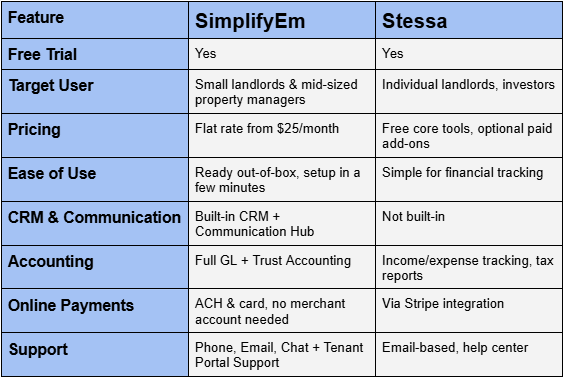
    SimplifyEm vs Stessa: Feature Comparison Table

    Stessa SimplifyEm Product Comparison


    Designed to Help You Scale—Starting Small

    SimplifyEm is built for both small landlords and mid-sized property managers. Whether you manage 5 units or 500, the system scales with your business. It provides robust tools like accounting, CRM, and automated communications—all without overwhelming you with complexity.

    Stessa, by contrast, is purpose-built for individual real estate investors focused on portfolio performance and financial tracking. It’s ideal for landlords who need high-level income/expense insights without managing a large number of tenants.

    If you’re a small landlord today, but plan to grow, SimplifyEm is built to grow with you—unlocking features as your portfolio expands without switching platforms.

    Ease of Use and Setup

    SimplifyEm can be set up in a few minutes. With a streamlined interface and automation baked into everyday workflows, you’ll spend less time in the software—and more time running your business.

    Stessa also emphasizes ease of use, especially for tracking property-level finances and preparing for tax season. Its dashboard is tailored to investor metrics, not tenant management.

    Pricing Comparison

    • SimplifyEm starts at just $25/month with no extra charge for core features like trust accounting, CRM, or support.
    • Stessa is free for most users, with optional paid features like rent collection via Stripe, premium banking, or document storage.

    Explore SimplifyEm’s pricing here.

    Communication & CRM Capabilities

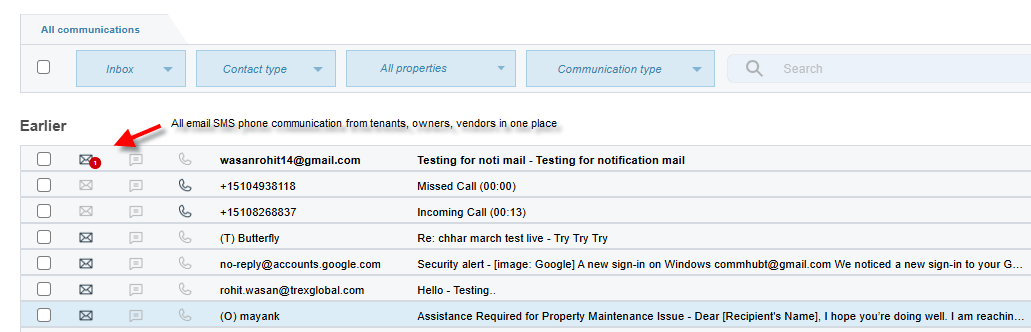
    SimplifyEm includes a powerful CRM and Communication Hub to help you:

    • Track leads and prospects
    • Automate lease renewals and follow-ups
    • Send SMS and email reminders
    • Keep all conversations in one timeline

    While Stessa excels in financial reporting, it doesn’t include built-in communication tools or CRM features.

    See how SimplifyEm helps with tenant communication.

    SimplifyEm Communication Center

    Accounting Features

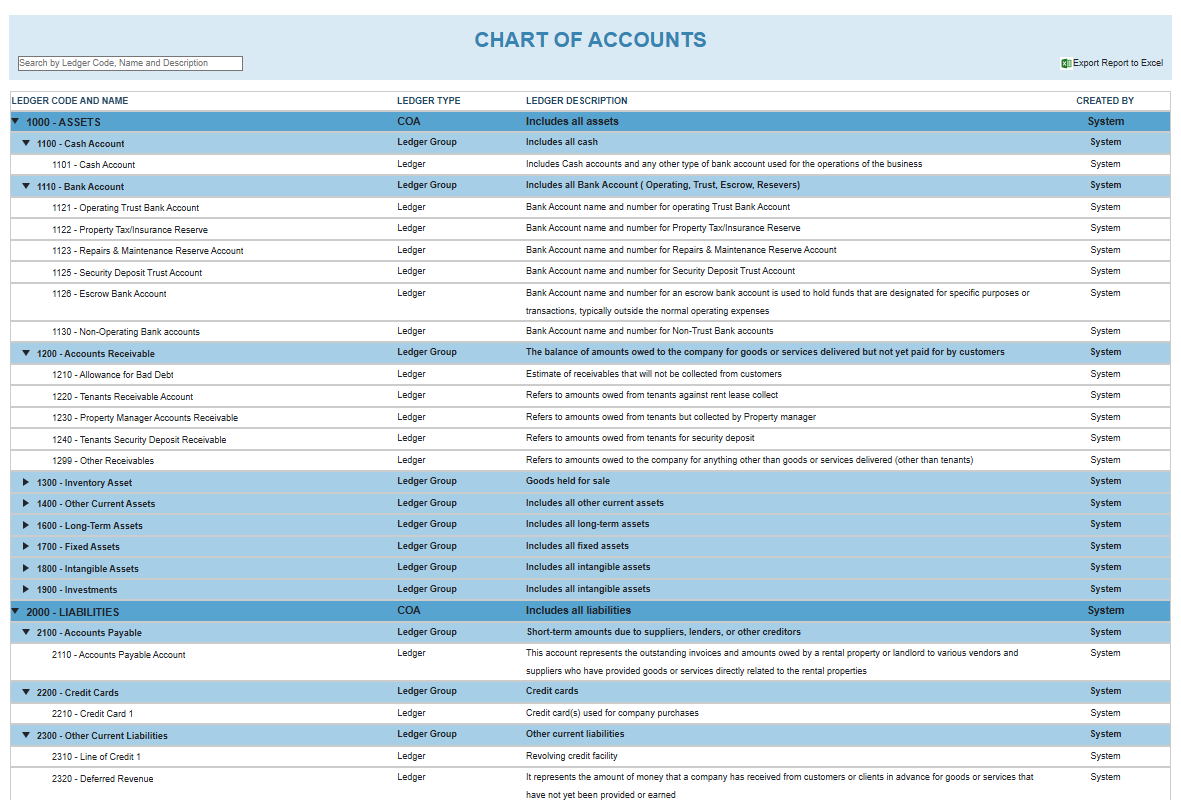
    • SimplifyEm offers full General Ledger (GL) accounting, trust fund tracking, bank reconciliation, and owner statements.
    • Stessa focuses on financial insights, including income/expense tracking and tax-ready reporting.

    For detailed accounting needs and compliance (especially trust accounting), SimplifyEm provides stronger support for those use cases.

    Explore SimplifyEm’s accounting capabilities.

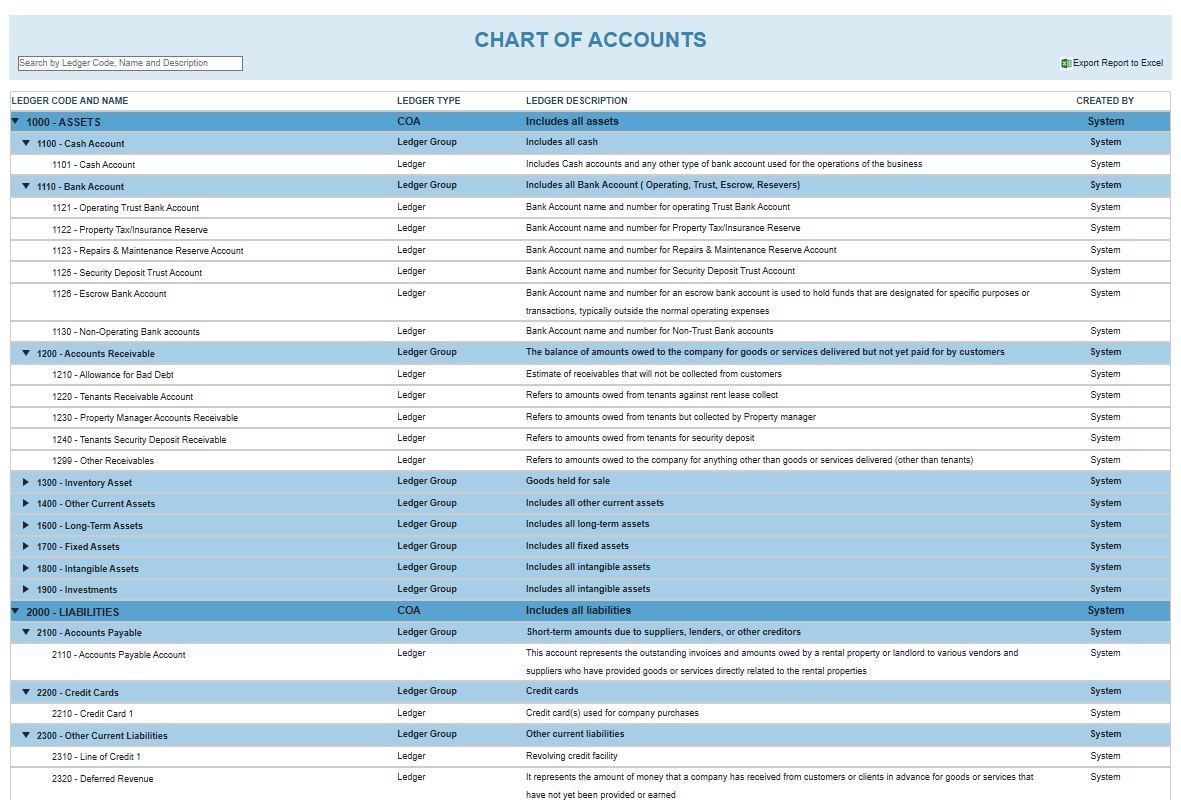
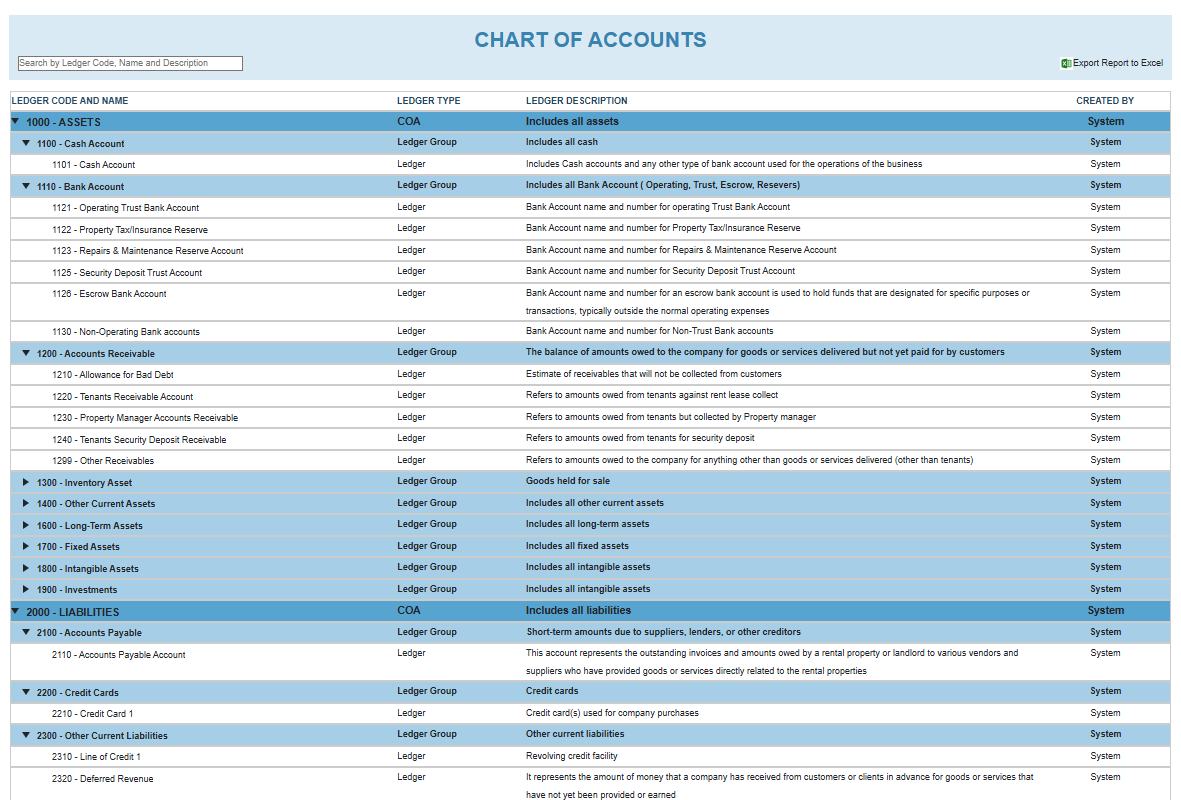
    SimplifyEm Chart of Accounts

    Online Rent Collection

    SimplifyEm enables rent collection through ACH or credit card, with features like:

    • Recurring payments
    • Automatic late fee calculation
    • Instant ledger updates

    Stessa offers rent collection through Stripe integration, which may require setup and processing fees.

    Learn more about SimplifyEm’s payment tools.

    Customer Support and the “Customer WOW” Experience

    One of SimplifyEm’s standout advantages is its live support. Users can get help via:

    • Phone
    • Email
    • Chat
    • Even tenants can call in for assistance on the tenant portal

    This is part of what SimplifyEm calls its “Customer WOW” experience—prioritizing real human help over ticket queues. It’s one of the reasons customers stay loyal.

    Stessa offers support via email and a help center designed for self-service, which works well for users comfortable managing everything solo.

    Final Verdict: Which One Should You Choose?

    Choose SimplifyEm if you:

    • Are a small landlord planning to grow
    • Need full accounting, CRM, and communication tools
    • Value phone support and hands-on help
    • Want predictable, affordable pricing

    Choose Stessa if you:

    • Are an individual investor focused on tracking ROI and property finances
    • Prefer a free tool with optional premium add-ons
    • Don’t require CRM or in-app communication

    For property managers and landlords ready to scale operations and simplify management, SimplifyEm is the best long-term partner.

    FAQ (Frequently Asked Questions) SimplifyEm Stessa Comparison

    • Is SimplifyEm good for small landlords too?

      Yes! SimplifyEm is perfect for small landlords who want to scale, offering powerful tools without complexity.

    • Does Stessa have built-in tenant communication?

      No, Stessa does not include CRM or messaging tools. Communication must be handled externally.

    • Can tenants call SimplifyEm for help?

      Yes! Tenants can call SimplifyEm for assistance with their portals—part of their Customer WOW support model.

    • Is SimplifyEm easier to scale with than Stessa?

      Yes. SimplifyEm is designed to grow with you, with features that unlock as your portfolio expands.

    • Is rent collection available on both platforms?

      Yes. SimplifyEm offers built-in rent collection, while Stessa offers it through Stripe integration.

    Sources:

    U.S. Small Business Administration – Rental Property Management Guide
    https://www.sba.gov/blog/how-manage-residential-rental-property

    HUD – Resources for Landlords and Property Managers
    https://www.hud.gov/program_offices/housing/mfh/hsgrent

    Property Management Software for Apartments vs Condos vs Commercial Units: What’s the Difference?

    Filed Under: Business Management, Features, Property Maintenance, Property Management, Property Management Software, Tenant Management

    Not all properties are managed the same way—and not all software is built to handle every property type equally well. Whether you’re managing an apartment building, a self-managed condo association, or a handful of commercial spaces, the tools you use need to match your operational and reporting needs.

    This article breaks down the differences between managing apartments, condos, and commercial units—and how software like SimplifyEm, built for long-term residential property management, can still support HOAs and small commercial portfolios with ease.

    Key Differences in Property Management Software for Apartments, Condos, and Commercial Properties

    Apartments – Lease-Driven Residential Management

    Managing apartments means focusing on tenants, lease cycles, and rent collection. These properties often have:

    • High tenant turnover
    • The need for lease renewals and rent reminders
    • Frequent unit-level maintenance
    • Automated late fees and recurring charges

    Condos – Association-Focused and Owner-Driven

    Condominium management usually involves working with owners and HOA boards rather than tenants. Key needs include:

    • Monthly or quarterly HOA dues
    • Shared area maintenance
    • Document sharing (rules, CC&Rs, financials)
    • Transparent communication with board members and owners

    Commercial Units – Complex Lease Terms and Vendor Coordination

    Commercial property managers deal with unique challenges like:

    • Triple Net (NNN) leases, CAM charges, and rent escalations
    • Managing tenants like offices, retail, or warehouse users
    • Suite-level reporting and lease abstraction
    • Vendor coordination for long-term contracts


    Software Requirements for Each Property Type

    Property Types Comparison

    Property Management Software: SimplifyEm’s Strength in Residential, HOA & Light Commercial Use Cases

    Best-Fit: Long-Term Residential Property Management

    SimplifyEm is purpose-built for landlords and property managers overseeing long-term residential properties. Ideal for:

    • Apartments, single-family homes, duplexes, and multifamily units
    • Lease tracking, rent collection, recurring charges
    • Automated late fees, rent reminders, and GL-level financial reporting

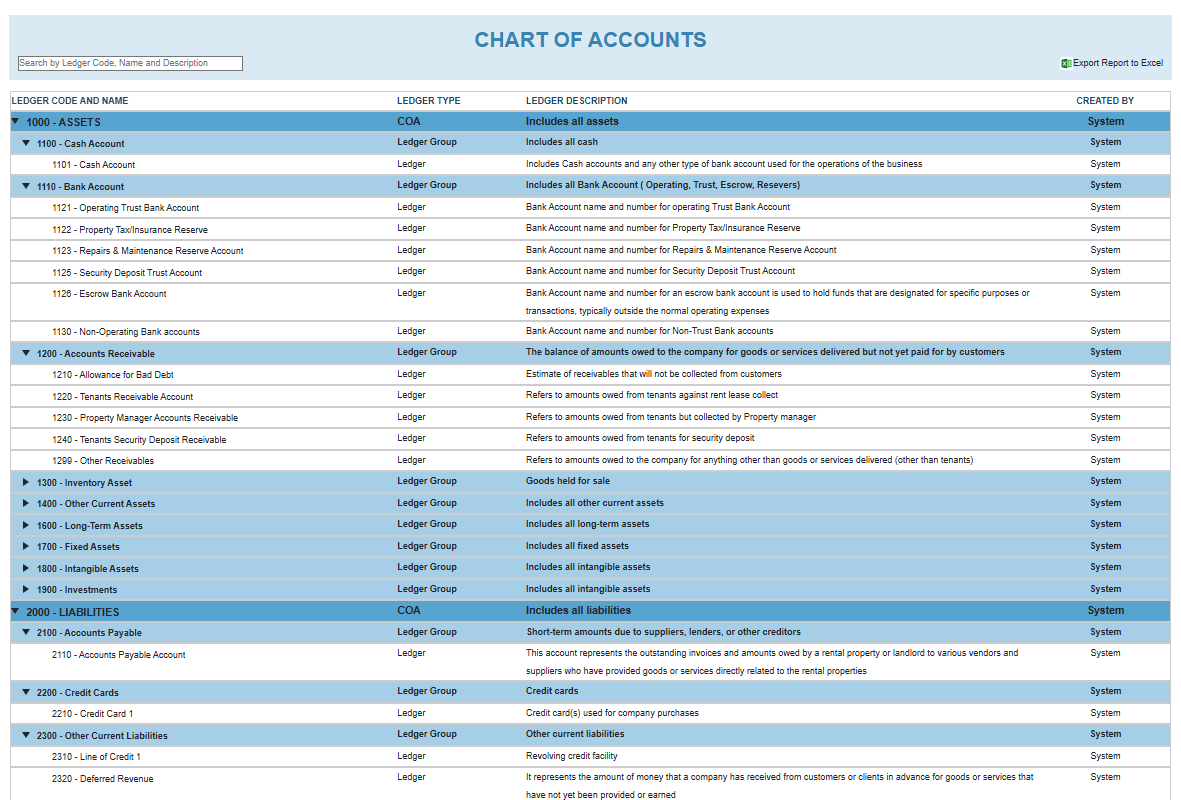
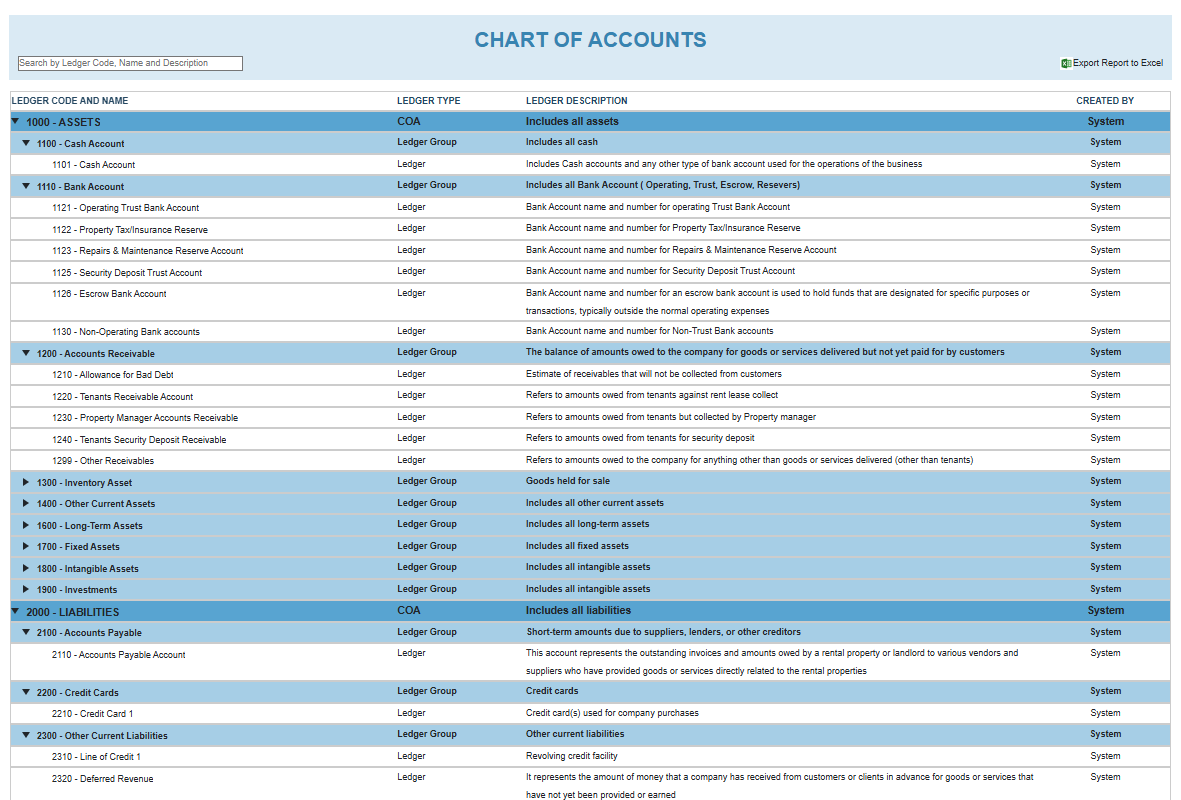
    SimplifyEm Chart of Accounts

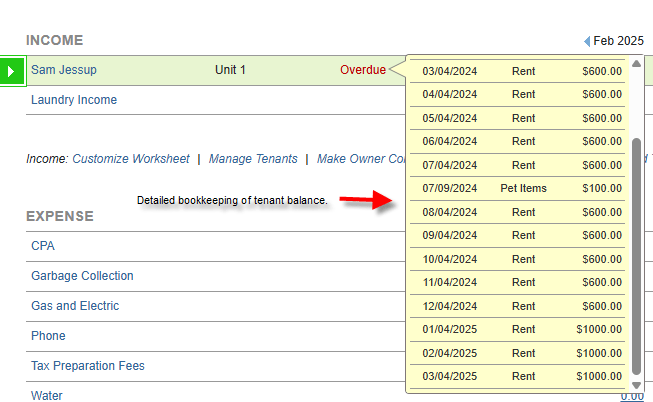
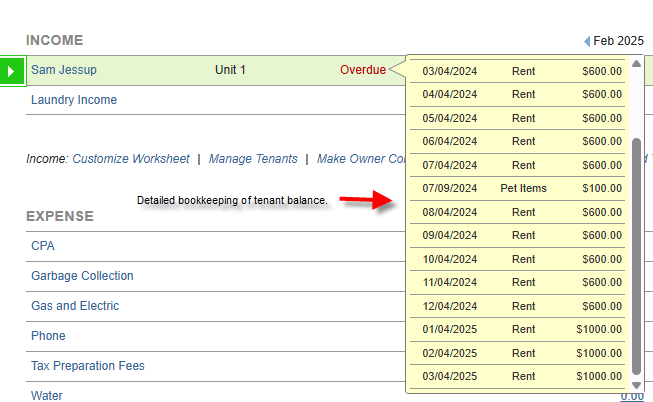
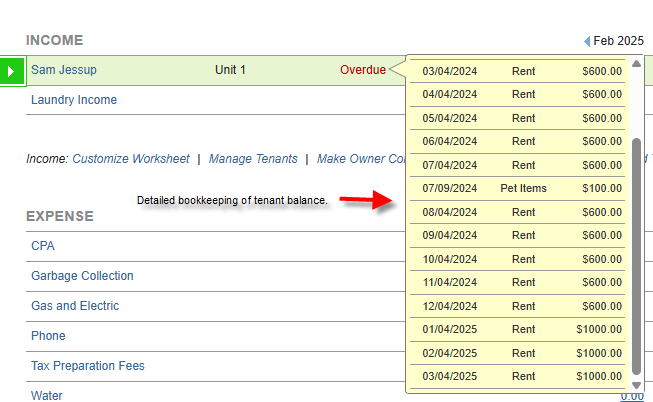
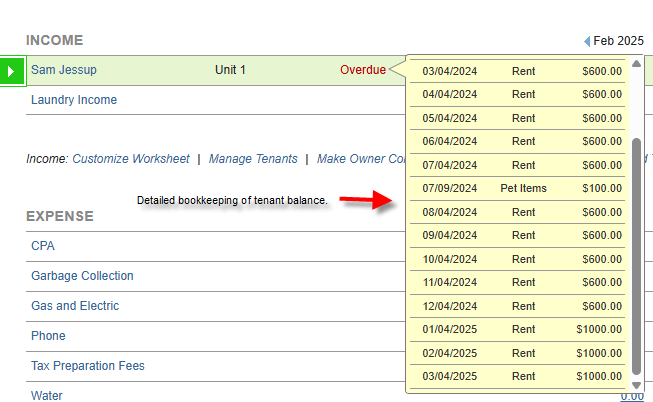
    SimplifyEm Tenant Balance Bookkeeping

    Explore all residential features

    HOA and Condo Managers Use SimplifyEm for Simplicity

    While SimplifyEm is not an HOA-specific system, many small condo associations and self-managed HOAs use it due to:

    • Easy dues tracking and payment collection
    • Common area maintenance and service requests
    • Owner communication via message templates
    • No steep learning curve or high costs

    Small Commercial Portfolios Can Use It—With Caveats

    SimplifyEm isn’t built for institutional commercial portfolios, but many users with 5–30 commercial units use it successfully thanks to:

    • Custom fields for rent escalations or utility charges
    • Basic GL accounting and suite-specific rent tracking
    • Vendor tracking for maintenance and compliance

    If you need CAM reconciliation, lease abstraction, or complex escalations, a commercial-specific platform may be better.

    One Dashboard for Mixed Residential + HOA or Commercial

    SimplifyEm offers flexibility to manage mixed portfolios with:

    • Custom property types, tags, and reporting filters
    • Combined rent rolls and owner statements
    • Role-based access for different types of stakeholders


    FAQs – Using Property Management Software for Mixed Portfolios

    • Can I manage condos and apartments in the same system?

      Yes. SimplifyEm lets you manage both through configurable fields and tags. You can track rent, HOA dues, and communication in one place.

    • What does SimplifyEm offer for HOA and small commercial portfolios?

      For small HOAs: dues tracking, messaging, and shared maintenance. For commercial: rent tracking and suite-level customization.

    • Is SimplifyEm ideal for retail/industrial properties?

      Not for large-scale use, but for small portfolios or single-building commercial managers, it’s a cost-effective and easy-to-use option.

    • What are the limitations for commercial lease tracking in SimplifyEm?

      SimplifyEm does not support lease abstraction, CAM reconciliations, or advanced percentage rent modeling.

    Final Thoughts: Choosing the Right Property Management Software for Your Property Type

    Each property type has unique management needs:

    • Apartments need tools for tenants, leases, and maintenance.
    • Condos/HOAs need dues tracking, document sharing, and owner communication.
    • Commercial properties require advanced lease and financial handling.

    SimplifyEm is the right choice for long-term residential management and is often used by small HOAs and commercial portfolios because of its simplicity, flexibility, and value.

    Try SimplifyEm free

    Can You Use QuickBooks for Property Management? Here’s What You Need to Know

    Filed Under: Business Management, Property Management, Property Management Software

    Many landlords and property managers wonder if they can use QuickBooks to manage rental properties. After all, it’s one of the most popular accounting platforms for small businesses. But when it comes to property management—tracking tenants, collecting rent, handling maintenance, and producing owner statements—QuickBooks shows its limits.

    This article compares QuickBooks directly to SimplifyEm, a platform built specifically for small landlords and mid-sized property managers.

    What QuickBooks Does Well for Business Owners

    General Accounting Strengths

    QuickBooks offers solid features for general business bookkeeping:

    • Double-entry accounting with a full Chart of Accounts (COA)
    • Financial reports and bank reconciliation
    • CPA-friendly exports and tax categorization

    These features make QuickBooks a powerful tool—for users with a deep understanding of accounting principles.

    Why It’s Not Built for Property Management

    QuickBooks was designed for freelancers, consultants, and retail businesses—not property managers or landlords. That means:

    • No built-in tenant or lease tracking
    • No online rent collection tools
    • No maintenance requests or rent reminder workflows

    Users must manually customize fields, reports, and ledgers to “fit” rental workflows—often with limited success.

    Can Small Landlords and Property Managers Actually Use QuickBooks Effectively?

    The Accounting Barrier

    To use QuickBooks well for rentals, you need to understand:

    • Chart of Accounts (COA) setup
    • General Ledger (GL) principles
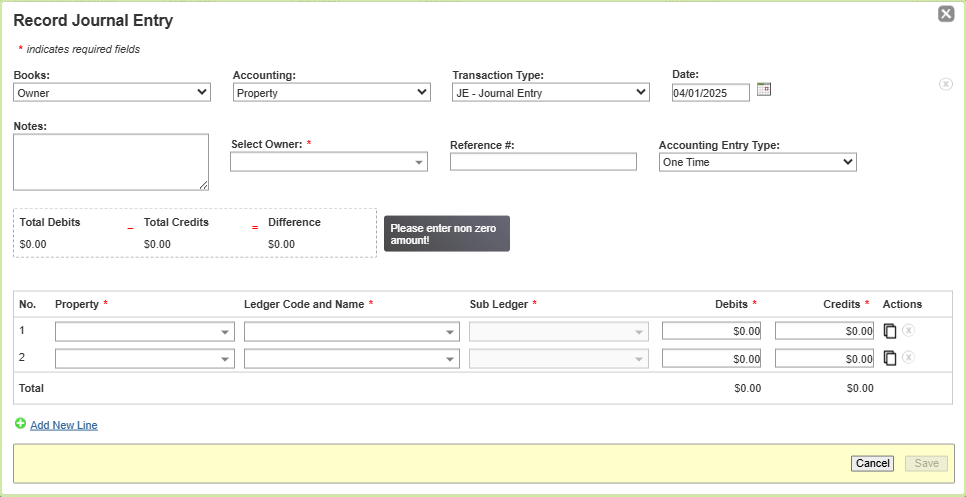
    • Journal entries and double-entry accounting

    Most small landlords and even many property managers don’t have that background. Mistakes are common—and costly.

    The Result: Confusion and Errors

    Without property-specific workflows, users often:

    • Track rent payments manually
    • Forget to post late fees
    • Struggle to reconcile security deposits
    • Rely on spreadsheets outside the system

    In the end, many hire bookkeepers just to manage QuickBooks—or abandon it altogether.

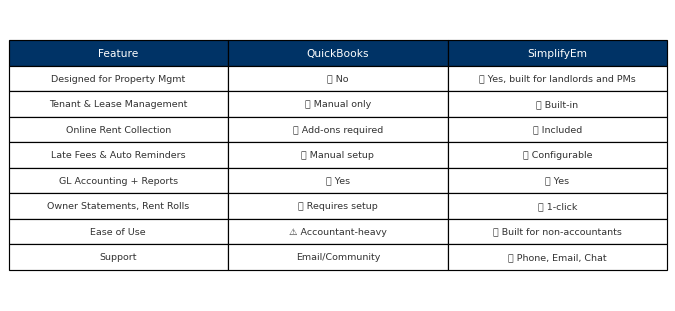
    QuickBooks vs. SimplifyEm: Feature-by-Feature Comparison

    QuickBooks SimplifyEm Comparison

    Why SimplifyEm Is Better for Landlords and Property Managers

    Start Simple, Grow With Ease

    SimplifyEm lets you start with just the tools you need—like rent tracking and lease reminders—and grow into full GL accounting and CRM as your portfolio expands.

    Built for Property Workflows

    You can:

    • Track leases and tenants
    • Send rent reminders and charge late fees
    • Accept online payments
    • Generate 1099s, rent roll reports, and owner statements

    SimplifyEm Tenant Balance Tracking

    SimplifyEm Chart of AccountsSimplifyEm Journal Entries
    All without needing accounting training.

    Transparent Pricing, Customer Support that WOWs

    • Plans start at $25/month for up to 10 units
    • No per-unit fees or forced upgrades
    • Support via phone, email, and chat

    Explore property management accounting features
    Compare pricing plans

    FAQs – QuickBooks vs. SimplifyEm

  • Can I use QuickBooks to track rental income?

    Yes, but it requires custom setup, manual tracking, and strong accounting knowledge.

  • Is there a QuickBooks template for landlords or property managers?

    Some third-party templates exist, but they don’t include lease tracking, rent automation, or late fees.

  • Do I need an accountant to use QuickBooks for rentals?

    Most landlords and property managers do. It’s not designed for property management out-of-the-box.

  • What’s the best alternative to QuickBooks for managing rentals?

    SimplifyEm—it includes property accounting, tenant management, and reminders, all without needing accounting experience.

  • Final Thoughts: Is QuickBooks Right for Managing Rental Properties?

    QuickBooks is a powerful accounting platform—but not for rental property management. Landlords and property managers who try to make it work often spend more time customizing or fixing mistakes than actually managing their business.

    SimplifyEm is the smarter choice. It’s designed specifically for small landlords and mid-sized property managers. You can start simple and grow into full-featured GL accounting and CRM—no accounting degree required.

    Start your free trial

    Sources:

    U.S. Small Business Administration (SBA) – Choosing the Right Accounting Software

    Internal Revenue Service (IRS) – Tax Information for Rental Property Owners

    Affordable Property Management Software: Top Picks for 2025

    Filed Under: Business Management, Property Management, Property Management Software

    Managing rental properties shouldn’t cost a fortune. Whether you’re just starting with a few units or managing a growing portfolio, the right software can save you hours and improve tenant satisfaction—without breaking your budget. In this guide, we’ll review the top affordable property management software options for 2025, balancing pricing with essential features, support, and scalability.

    What to Expect From Affordable Property Management Software

    Core Features That Should Be Included

    Even budget-friendly platforms should provide the basics:

    • Online rent collection
    • Maintenance tracking
    • Tenant screening and lease management

    Look for tools that simplify everyday tasks while keeping costs predictable.

    Where Low-Cost Platforms Cut Corners

    Some free or low-tier platforms limit support or remove key features like accounting. Others make you upgrade just to access reports or automate rent reminders.

    Why “Affordable” Can Still Mean “Scalable”

    Affordable doesn’t mean you should outgrow it. Tools like SimplifyEm offer tiered pricing that starts small, but includes features mid-sized property managers rely on—like GL accounting, CRM, and rent roll reports—without requiring expensive upgrades.

    Best Affordable Property Management Software for 2025

    SimplifyEm – Best Tiered Pricing with Full CRM and Accounting

    Best For: Small landlords scaling to mid-sized portfolios (10–200+ units)

    Overview: SimplifyEm is designed to grow with you. You can start with a plan for up to 10 units at $25/month, and scale seamlessly with transparent pricing tiers. Unlike many competitors, even base plans include full property accounting, tenant and lease management, and CRM functionality.

    Key Highlights:

    • Tiered pricing starting at $25/month for 10 units
    • Rent tracking, GL accounting, CRM, and reminders included
    • Full support via phone, email, and chat
    • No setup fees or forced feature upgrades
    • Scales with you as you grow—hundreds of units supported

    SimplifyEm Chart of Accounts

    SimplifyEm Tenant Balance Tracking
    View all features
    See pricing
     Schedule a demo

    TurboTenant – Best Free Option for Basic Landlords

    Free and easy to use, TurboTenant is ideal for landlords with one or two units who only need basic tools like online applications and screening. It lacks accounting or live support.

    Avail – Best Free Tool with Custom Lease Templates

    Avail lets landlords customize lease documents based on local laws and includes basic rent tracking. Customer support is limited to email.

    TenantCloud – Best Budget Option with Automation

    TenantCloud offers free and paid tiers with invoicing, tenant communications, and maintenance requests. Its UI requires a learning curve.

    RentRedi – Best Affordable Mobile App Experience

    Designed for mobile-first landlords, RentRedi includes ACH rent payments and integrations. Plans are around $20/month, but support is limited to chat.

    DoorLoop – Best Flat-Rate Option for Mid-Sized Portfolios

    DoorLoop offers flat monthly pricing with full-suite features, but is better suited to portfolios with 50+ units.

    Buildium – Best Starter Plan for HOAs and Professionals

    Buildium includes accounting, leasing, and HOA tools, starting around $55/month. Pricing is per-unit and may not be ideal for small landlords.

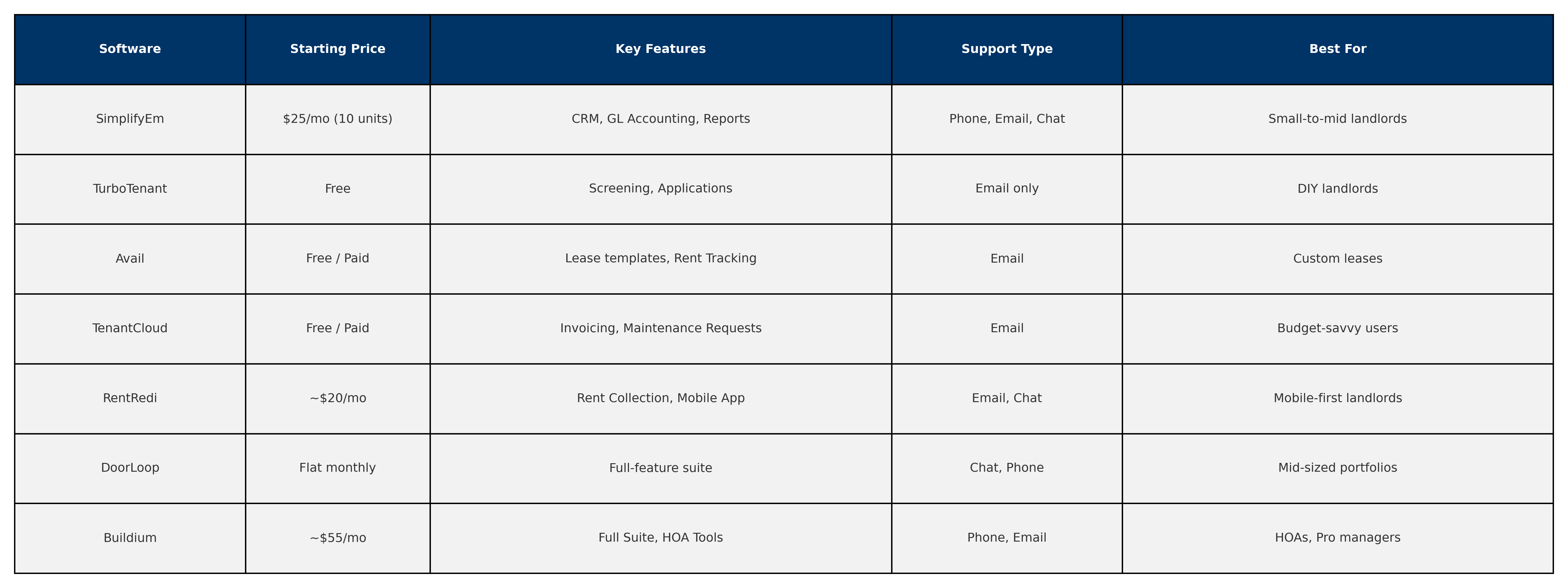
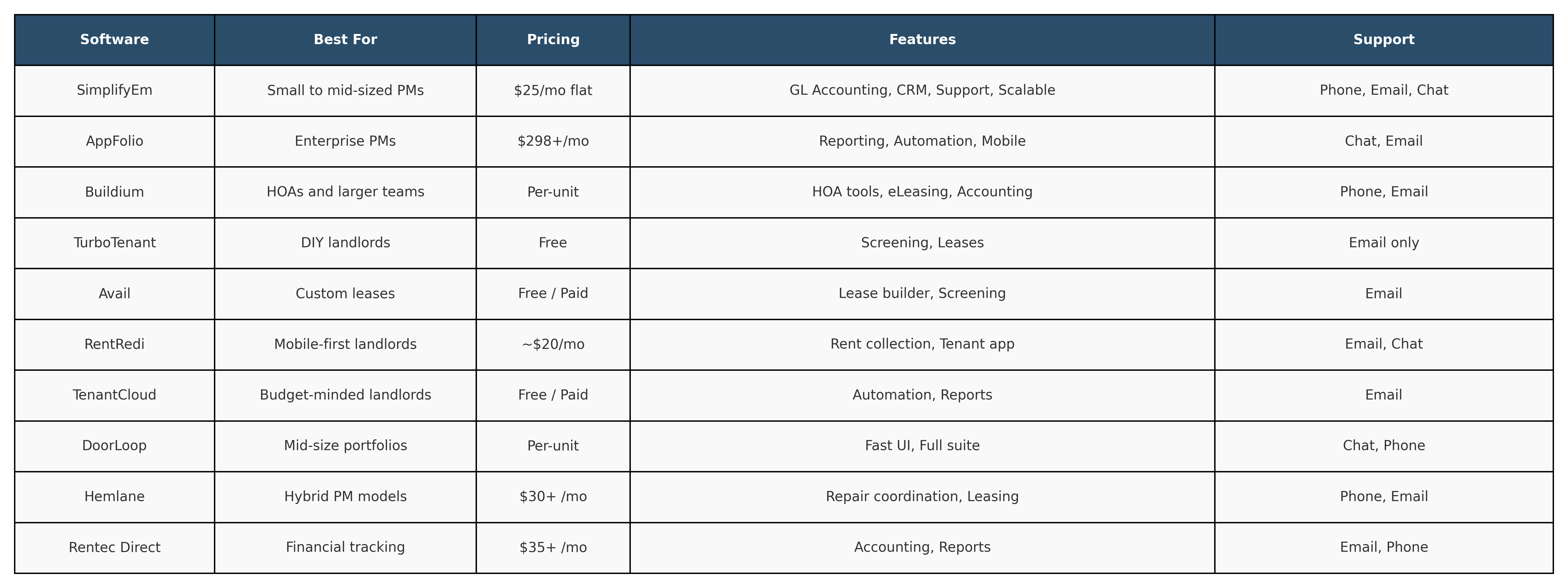
    Comparison Table – Affordable Software Options at a Glance


    Affordable Property Management Software Comparison

    What Makes SimplifyEm the Best Value in 2025

    SimplifyEm offers small landlords a clear path to scale. You don’t need to switch platforms as your portfolio grows. The pricing is transparent, support is included, and key features like GL accounting, CRM, and automated rent reminders are built in—even at lower tiers.

    Whether you’re managing 5 or 150 units, you’ll have access to:

    • Rent tracking with recurring billing and late fee automation
    • Full general ledger accounting and reports
    • CRM tools to manage leads and tenant follow-ups
    • 1099 reporting and Schedule E exports

    Start your trial or schedule a demo

    FAQs About Low-Cost Property Management Software

    • What is the cheapest property management software with accounting?

      SimplifyEm offers accounting features starting at just $25/month.

    • Are free landlord software tools safe to use?

      Many are safe, but lack accounting, support, or scalability. Paid tools like SimplifyEm or TenantCloud offer more functionality.

    • Can I scale with affordable software?

      Yes. SimplifyEm is specifically built for landlords who start small but plan to grow into mid-sized portfolios.

    • What’s the best value software under $30/month?

      SimplifyEm offers the best feature-to-cost ratio for landlords who want support, accounting, and CRM.

    Final Thoughts: Choosing the Right Budget Software for Your Rentals

    Not all affordable tools are created equal. If you’re looking for a platform that grows with you, SimplifyEm stands out. It offers small landlords an entry point at just $25/month—and mid-sized managers a path to full-featured functionality without ever switching platforms.

    See SimplifyEm pricing plans
    Try SimplifyEm free

    Sources
    U.S. Department of Housing and Urban Development (HUD) – Rental Housing Assistance

    IRS – Tax Information for Landlords (Schedule E)

    Top 10 Rental Property Management Software Tools for 2025 (Ranked & Compared)

    Filed Under: Business Management, Features, Property Maintenance, Property Management

    Whether you’re managing a single-family home or a growing portfolio of rental properties, the right property management software can save you hours each week and help you stay organized, profitable, and compliant. In 2025, software options for landlords and property managers continue to evolve—some built for DIY simplicity, others designed for professional-grade accounting and communication.

    This article compares the 10 best rental property management software tools for 2025, with rankings based on affordability, features, scalability, support, and ease of use. Whether you’re starting with one unit or managing hundreds, there’s a platform that fits your needs.


    What to Look for in Rental Property Management Software

    Essential Features for Landlords and Mid-Sized Managers

    Rental property software should help you:

    • Collect rent online (ACH, card, or cash-based payments)
    • Screen tenants with background and credit checks
    • Manage leases and renewals
    • Handle maintenance requests and tenant communication

    Platforms like SimplifyEm check all these boxes while offering tools you can grow into.

    Full Accounting and Reporting Capabilities

    Some platforms stop at rent tracking. Others, like SimplifyEm, offer full general ledger accounting, income and expense reports, and tax-ready exports—ideal for mid-sized property managers who need professional reporting.

    CRM and Communication Tools to Scale

    As you grow, it’s critical to manage interactions with tenants, prospects, and owners. Look for built-in CRM tools to handle follow-ups, automate reminders, and centralize communication.

    Customer Support That Actually Helps

    Good support prevents costly mistakes. Phone, chat, and email support, like what SimplifyEm offers, is a must—especially for landlords who wear multiple hats.

    Start Simple, Scale When You’re Ready

    Platforms like SimplifyEm allow you to start with just the features you need today. When you’re ready to grow, you already have access to full GL accounting, CRM, and automation tools. No migration. No re-training.

    Top 10 Rental Property Management Software Tools for 2025

    1. SimplifyEm – Best for Landlords and Mid-Sized Managers Who Want to Scale Efficiently

    Best For: Landlords and property managers with 1–500+ units

    Overview: SimplifyEm is designed for both small landlords and growing property managers. You can start simple (rent tracking, reminders, screening), then scale into full CRM and general ledger accounting as your business grows.

    Pros:

    • Flat-rate pricing from $25/month (no per-unit fees)
    • Full GL accounting, built-in CRM
    • Online rent collection, late fee automation, recurring charges
    • Phone, email, and chat support
    • Premium features available without forced upgrades
    • SimplifyEm Chart of AccountsSimplifyEm Tenant Balance

    Cons:

    • No advanced marketing syndication (not critical for most)

    🔗  See pricing 


    2. AppFolio – Best for Larger Portfolios and Mixed Asset Classes

    Best For: PMs managing 200+ units

    Overview: AppFolio is a robust platform with strong automation and reporting. It offers advanced tools, but comes with a steeper learning curve and pricing model.

    Pros:

    • Strong mobile app
    • Advanced automation and dashboards
    • Owner portals and maintenance tracking

    Cons:

    • $298 minimum monthly spend
    • May require onboarding support


    3. Buildium – Best for Associations and Traditional Managers

    Best For: Property managers overseeing residential or HOA portfolios

    Pros:

    • HOA tools, budgeting, and accounting
    • eLeasing, resident portals
    • Scalability for 50+ units

    Cons:

    • Per-unit pricing
    • Support prioritization varies by tier


    4. TurboTenant – Best Free Tool for DIY Landlords

    Best For: Landlords managing 1–5 units

    Pros:

    • Free for landlords
    • Online applications and screening
    • Lease templates included

    Cons:

    • Monetizes tenants
    • No built-in accounting
    • Email-only support


    5. Avail – Best for Lease Customization and Screening

    Best For: Landlords who want local lease templates and tracking

    Pros:

    • Free tier available
    • Lease builder with local clauses
    • Maintenance request system

    Cons:

    • Basic financial tools
    • Limited scalability


    6. RentRedi – Best Mobile App for Small Landlords

    Best For: Tech-savvy landlords with mobile-first workflows

    Pros:

    • Intuitive app for both landlord and tenant
    • Accepts ACH, credit card, and cash via PayNearMe

    Cons:

    • $19.95/month (annual commitment)
    • Reporting more suitable for smaller portfolios


    7. TenantCloud – Best for Automation on a Budget

    Best For: DIY landlords with 5–20 units

    Pros:

    • Free tier with optional paid upgrades
    • Custom branding, invoicing, maintenance requests

    Cons:

    • Learning curve
    • Limited support at free tier


    8. DoorLoop – Best for Speed and Modern Design

    Best For: Landlords who value fast UI and feature-rich software

    Pros:

    • Fast setup
    • Full-feature dashboard (rent, maintenance, reports)

    Cons:

    • Per-unit pricing
    • Best suited for PMs with 50+ units


    9. Hemlane – Best for Hybrid Local-Remote Management

    Best For: Out-of-state investors

    Pros:

    • Hybrid property manager coordination
    • Leasing and repair coordination included

    Cons:

    • High pricing for premium tiers
    • Niche use case


    10. Rentec Direct – Best for Basic Bookkeeping and Reports

    Best For: Bookkeeping-focused landlords

    Pros:

    • Accounting-focused interface
    • Strong QuickBooks alternative

    Cons:

    • Less modern interface
    • Traditional-style tenant portals

    Comparison Table: Which Rental Software Fits Your Needs?

    Rental Software Comparison

    How to Choose the Right Property Management Software in 2025

    Are You Managing 1 Property or 100?

    Start with your unit count. If you’re just getting started, you want a tool that’s intuitive and easy to set up. But if you’re growing, you need a solution that includes CRM, full accounting, and multi-user permissions.

    Do You Need Full Accounting or Just Rent Collection?

    Rent collection is great—but eventually you’ll need GL-level accounting, owner statements, and tax reports. SimplifyEm provides this out of the box, even if you only start with 5 units.

    Why SimplifyEm Works for Both New and Growing Managers

    Unlike tools that lock key features behind unit minimums, SimplifyEm lets you use only what you need today—then scale to full functionality later. No painful migrations.

    FAQs About Rental Property Management Software

    • What is the best rental software for a small portfolio?

      SimplifyEm and TurboTenant are great for 1–20 units. SimplifyEm wins if you need accounting.

    • Can I scale my business with property management software?

      Yes—especially with platforms like SimplifyEm and Buildium that support CRM, accounting, and automation.

    • What features do mid-sized property managers need?

      • General ledger accounting
      • CRM and communication tracking
      • Support for multiple users and properties
    • How is SimplifyEm different from enterprise platforms like Yardi?

      SimplifyEm offers enterprise-grade features with no per-unit pricing, ideal for growing teams who want simplicity + power.

    • Final Thoughts: What’s the Best Property Management Software in 2025?

      Choosing the right rental software depends on your size, goals, and need for scalability. If you’re a landlord or property manager looking for:

      • Flat-rate pricing
      • Ease of use<
      • Full functionality when you’re ready for it
      • Real human support

      Then SimplifyEmis a smart choice for 2025 and beyond.

      📍Explore pricing

    Sources:

    https://www.sba.gov/business-guide/manage-your-business/finances

    https://www.nmhc.org/research-insight/

    • Page 1
    • Page 2
    • Page 3
    • Interim pages omitted …
    • Page 13
    • Go to Next Page »

    Primary Sidebar

    SimplifyEm
    Streamline Your Property Management

    Schedule A FREE Demo

    Table Of Contents

    SimplifyEm

    • Property Management Software
    • SimplifyEm Reviews
    • About Us
    • Pricing
    • SimplifyEm CRM
    • Terms and Conditions
    • Privacy Policy
    • SimplifyEm Security

    Features

    • Property Management
    • Online Rent Payments
    • Affordable Tenant Screening
    • Rental Listing
    • Request Demo
    • Accounting Software
    • Reconciliation
    • Tenant Screening
    • 1099 eFiling Feature
    • Reports
    • Communication Center
    • Integrated Rental Application
    • Rental Listing
    • Online Rent Payments
    • Tenant Portal
    • AI in Property Management

    Forms

    • Lease Agreement
    • Notice To Quit
    • Notice To Pay Rent
    • Rental Application
    • Rental Inspection
    • Lease Termination
    • Eviction Notice

    Resources

    • Blog
    • Property Management Companies
    • Law
    • Buzz
    • FAQ

    Company

    • Contact Us
    • Support
    • Press And Media
    • Career


    SimplifyEm Property Management Software Logo

    Follow us

    Facebook Instagram Twitter LinkedIn YouTube

    Download App

    Google Play App Store
    SimplifyEm Google Reviews - Rated 4.8 out of 5 SimplifyEm G2 Reviews - Rated 4.7 out of 5 SimplifyEm Software Advice Reviews - Rated 4.8 out of 5 SimplifyEm Capterra Reviews - Rated 4.7 out of 5

    Copyright © 2025 SimplifyEm Inc. · All rights reserved.

    Get Your Lease Agreement Form in Just One Step

    I am a: